




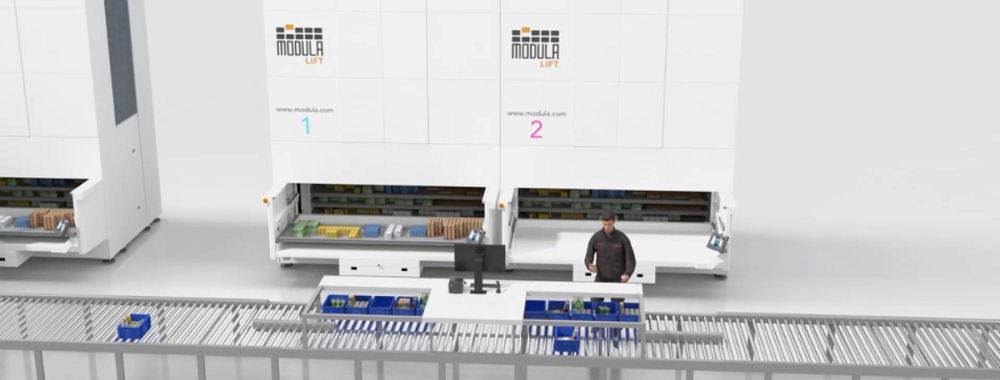
What is the difference between a Vertical Rotary Container (VC) and a Vertical Lift Container (VLM)?
Vertical rotating containers work like a Ferris wheel, storing small items on rotating pallets for transfer. This system was first introduced in the 1950s and is primarily used to store items of similar size and weight. It is also known as a storage carousel or vertical carousel system.
A vertical lift container, on the other hand, is an automated storage and retrieval system with a more advanced design, similar to a vending machine, allowing warehouse operators to safely remove inventory without having to rotate all the contents.
From the outset, VLM demonstrated clear advantages in most operations.
In this article, we’ll explore the differences in mechanics and operation to help you decide if investing in a vertical lift container is the right choice.
Vertical Rotary Containers vs Vertical Lift Containers: Key Differences
Let’s explore the key differences between these two storage solutions and how they impact efficiency, space utilization, and overall warehouse operations.
- Balance function:Vertical rotating containers require careful distribution of weight between pallets to avoid overloading one unit, whereas vertical lift containers do not require this and allow items to be retrieved more quickly.
- Solving space inefficiencies:Vertical rotating containers have fixed shelves, which can easily cause a waste of space when large and small items are placed on the same shelf. In contrast, vertical lift containers are designed with adjustable pallet heights, which can effectively eliminate the problem of wasted space.
- Maximize vertical storage:When using vertical rotating containers, warehouse employees can separate SKUs of different sizes into pallets of appropriate sizes. Rotating containers are usually limited to a height of about 25 feet to ensure stability. Vertical lifting containers can exceed 50 feet in height, making them ideal for high-density storage.
- Inventory accessibility:Rotating the rack vertically moves the entire racking unit to allow warehouse operators to remove inventory, which reduces productivity and efficiency. Vertical lift containers enable selective pallet movement, thereby increasing operating speed.
- Installation flexibility:Vertical rotating containers use a single steel frame structure, which makes them bulky and difficult to install in specific locations. In contrast, vertical lift containers are composed of individual components, making them easier to transport and assemble. Installation typically takes just two days, half the time it takes to install a vertical rotating container.
Key advantages of vertical lift containers (VLM)
Here’s how vertical lift containers can improve the way you store and retrieve materials:
1. Increase storage capacity
Vertical lift containers optimize vertical space utilization and maximize storage density by automatically adjusting pallet heights to accommodate items of different shapes and sizes.
At Modula APAC, our equipment pallets are designed to carry heavy loads and safely store bulky items like car parts and bulk materials.
This capability is critical for the pharmaceutical and automotive industries where heavy objects need to be accessed quickly.
2. Space efficiency
According to a survey, 36% of respondents cited limited warehouse space as a major challenge in warehousing operations.
This is where vertical lift containers come into play, making the most of high-ceiling spaces in factories.
turn out? The warehouse is more organized, free space is significantly increased and storage capacity is optimized.
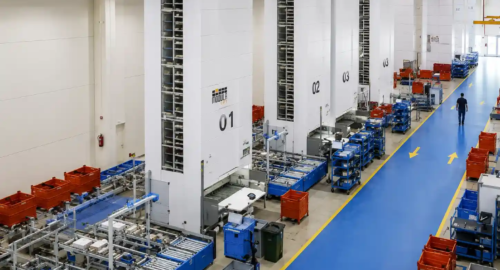
At Modula APAC, our VLM takes up only about 150 square feet of warehouse space, compared to 9,050 square feet required for traditional storage. This significant reduction frees up more space for operations and storage expansion.
3. Faster picking efficiency
Slow service is a common cause of customer dissatisfaction.
Lifting the container vertically can speed up the removal of items, eliminating the need to wait for the entire pallet group to move.
VLMs allow for faster and more accurate removal of items thanks to the variety of visual aids they offer, such as laser pointers that pinpoint the location of the desired item.
Our Modula Lift module enables picking efficiencies of over 300 order lines per hour.
4. Improve ergonomics
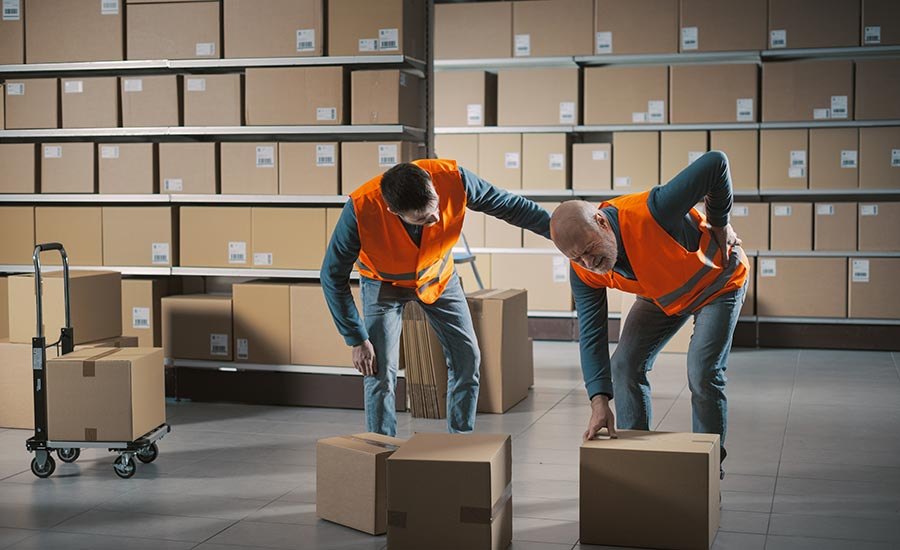
Operators are often at risk of injury when handling items at high and low locations, making the warehouse environment more accident-prone.
How does vertical lifting of containers reduce these risks?
Instead of operators looking for goods, the goods are automatically delivered to them. The VLM transports items to the appropriate height, eliminating the need to bend, stretch, or climb ladders.
This approach significantly reduces warehouse staff stress and risk of injury.
5. Better security
Worried about product safety or potential theft?
Vertical lift containers are equipped with features such as employee identification cards and Electronic Key System (EKS) readers to ensure that only authorized personnel have access to specific products.
6. Scalability
As business needs grow, vertical lift containers can be easily expanded—by adding more modules or reconfiguring the system to accommodate different types of goods.
This ensures that VLM can seamlessly adapt to inventory fluctuations or product line expansions, giving you a flexible storage solution to meet your business growth needs.
7. Energy efficiency
Vertical lift containers are generally more energy efficient than traditional manual storage systems.
Warehouse staff can program the modules to consume energy only when an operator activates the system to transfer pallets. When the system is idle, VLM power is in standby mode.
In addition, the VLM also features energy recovery. A specially designed inverter captures the kinetic energy of the elevator as it descends and converts it into electrical energy that is fed back to the grid.
This enables up to 40% reduction in VLM energy consumption.
How does a vertical lift container (VLM) work?
Vertical lift containers utilize a variety of automation systems to efficiently transfer inventory directly to warehouse operators:
- When warehouse employees need an item, they enter the SKU information on a computer interface. The VLM control system (integrated with the warehouse management system WMS) determines the fastest pickup route.
- The inserter/extractor moves to the designated pallet, secures the pallet, and transports it to a delivery station or operator port for employee access.
- Advanced VLM is equipped with multiple operation ports, allowing different operators to access items at the same time, significantly reducing waiting time.
- After picking the SKU, the system returns the pallet to its original location.
Discover advanced vertical lift containers at Modula APAC
At Modula APAC, we offer automated vertical lift containers to help you make the most of the available vertical space in your factory.
Our systems provide your warehouse staff with safe and secure access to large inventories. Just touch the intuitive Copilot controller or scan a barcode and items are automatically delivered to employees.
Final notes on vertical rotating containers and vertical lifting containers
Although vertical rotating containers predate vertical lift containers, VLM still has undeniable advantages.
Advantages include:
- Save warehouse space
- Improve picking efficiency and speed
- Create a safe and efficient work environment
- Enhance inventory security
- Encourage scalability
- Support sustainable development
Ready to move to smart warehouse automation? Our team will guide you throughout the entire process to help you successfully complete the integration and tailor a solution that meets your warehouse needs.

What’s the difference between a vertical carousel (VC) and a vertical lift module (VLM)?
A vertical carousel functions like a Ferris wheel, storing small items on trays that rotate to deliver them. Introduced in the 1950s, it’s designed primarily for items of similar size and weight and is also known as a storage carousel or vertical rotating shelf system.
On the other hand, a vertical lift module is an automated storage and retrieval system that features a more advanced design, similar to a vending machine, allowing warehouse operators to safely retrieve inventory without rotating all its contents.
Right off the bat, VLMs offer clear advantages in most operations.
In this article, we’ll explore the mechanical and operational differences to help you decide whether investing in a vertical lift module is the right choice.
Vertical Carousel vs. Vertical Lift Module: Key Distinctions
Let’s explore the key differences between these two storage solutions and how they affect efficiency, space utilisation, and overall warehouse operations.
- Balancing feature: Vertical carousels require careful weight distribution across trays to avoid overloading any single section, while vertical lift modules don’t and can retrieve items more swiftly.
- Addressing space inefficiency: Vertical carousels have stationary shelves, which can lead to space inefficiency when large and small items share the same shelf. On the other hand, vertical lift modules come with adjustable tray heights. This effectively eliminates wasted space.
- Maximising vertical storage: Warehouse employees can organise small and large SKUs into separate trays tailored to their dimensions when using vertical carousels, which are generally limited to heights of about 25 feet due to stability concerns. Alternately, vertical lift modules can extend beyond 50 feet, making them ideal for high-density storage.
- Inventory accessibility: Vertical carousels move the entire shelving unit so warehouse operators can access inventory, reducing productivity and efficiency. Vertical lift modules, on the other hand, enable selective tray movement, enhancing operational speed.
- Installation flexibility: Vertical carousels are built with a single solid end frame, making them bulky and challenging to install in certain locations. In contrast, vertical lift modules are composed of individual components, streamlining transport and assembly. Typically, installation takes just two days — half the time required for vertical carousels.
Key Advantages of a Vertical Lift Module (VLM)
Here’s how vertical lift modules can improve your storage and retrieval methods:
1. Increased Storage Capacity
Vertical lift modules optimise vertical space usage and maximise storage density by automatically adjusting tray heights to accommodate items of various shapes and sizes.
At Modula APAC, our unit’s trays are engineered to handle heavy loads, facilitating the secure storage of substantial items like automotive parts and bulk materials.
This capability is essential for pharmaceutical and automotive industries that need to access heavy materials quickly.
2. Space Efficiency
A survey found that 36% of respondents identified limited warehouse space as a significant challenge for warehouse operations.
This is where vertical lift modules come in handy, as they capitalise on high ceilings to make the most of the facility.
The result? A more organised warehouse with substantially increased free space and optimised storage capacity.
At Modula APAC, our VLM occupies just 150 square feet of your warehouse footprint, compared to the 9,050 square feet required for traditional storage methods. This dramatic reduction translates into more room for operations and storage expansion.
3. Faster Picking Retrieval and Efficiency
Slow service is a frequent source of customer dissatisfaction.
Vertical lift modules can expedite item retrieval, eliminating the need to wait for an entire set of trays to move.
Thanks to the extensive array of visual aids they offer, such as laser pointers that highlight the exact location of required items, VLMs enable quicker and more precise item retrieval for your operators.
Our Modula Lift modules deliver picking rates of over 300 lines per hour.
4. Improved Ergonomics
Operators often risk injury by reaching high and low to store and retrieve items, making warehouse environments accident-prone.
How can a vertical lift module minimise these risks?
Instead of operators traveling to retrieve goods, the items come directly to them. VLMs transport items to a convenient height, eliminating the need for bending, stretching, or climbing ladders.
This approach significantly reduces strain and injury risk for your warehouse employees.

5. Better Security
Worried about product security or potential theft?
Vertical lift modules are equipped with features such as badge and Electronic-Key-System (EKS) readers to guarantee that only authorised personnel can access specific products.

6. Scalability
As business demands increase, vertical lift modules can easily scale by adding more modules or reconfiguring the system to accommodate various types of goods.
This ensures VLMs can adapt seamlessly to fluctuating inventory levels or an expanding product range, providing a flexible storage solution that adapts to your business needs.
7. Energy Efficiency
Vertical lift modules are often engineered to be more energy-efficient than traditional manual storage systems.
Warehouse employees can program these modules to consume energy only when an operator activates the system to deliver a tray with items for picking. When not in use, the VLM remains electrically dormant.
Additionally, the VLM features an energy recuperation capability. A specially designed inverter harnesses the descending elevator’s kinetic energy and converts it into electricity that feeds back into the grid.
This results in up to a 40% reduction in energy consumption by the VLM.
How Do Vertical Lift Modules (VLMs) Operate?
Vertical lift modules leverage various automated systems to efficiently deliver inventory directly to warehouse operators:
- When a warehouse worker requires an item, they input the SKU information into a computer interface. The VLM control system, integrated with a warehouse management system (WMS), determines the quickest retrieval route.
- The inserter/extractor moves to the designated tray, secures it, and transports it to a delivery bay or access point where the worker can collect the item.
- Advanced VLMs are equipped with multiple access points, enabling different operators to retrieve items simultaneously, which significantly cuts down on wait times.
- After picking the SKU, the module restores the tray to its original location.
Find Cutting-Edge Vertical Lift Modules at Modula APAC
At Modula APAC, we provide automated vertical lift modules that utilise your facility’s available vertical space.
Our systems grant your warehouse staff convenient access to a vast inventory of security and safely stored products. Items are automatically brought to your warehouse employees at the touch of the intuitive Copilot controller or by scanning a barcode.
Final Notes on Vertical Carousels vs. Vertical Lift Modules
Though vertical carousels predate vertical lift modules, VLMs offer undeniable benefits.
Advantages include:
- Saving warehouse space
- Enhancing picking efficiency and speed
- Creating a safe and efficient working environment
- Boosting inventory security
- Encouraging scalability
- Supporting sustainability
Ready to make the switch to smart warehouse automation? Our team is here to guide you through the transition for a smooth integration tailored to your warehouse needs.
![Unlocking Efficiency With Vertical Lift Modules [Benefits & FAQs]](https://en.modula.cn/wp-content/uploads/2025/06/vertical-lift-modules-hero-image-500x270-c-center.webp "Unlocking Efficiency With Vertical Lift Modules [Benefits & FAQs]")