



As the semiconductor industry chain accelerates toward high reliability, scale, and refinement, manufacturing enterprises are undergoing profound changes in their requirements for material management.
Can materials be properly stored? How can sensitive materials be managed in a standardized way? In the face of high-mix, low-volume material demands, how can picking efficiency and accuracy be improved? And how can standardized management processes reduce the uncertainty caused by manual operations?
These issues, which appear to occur in the warehousing stage, are in fact closely related to the operational efficiency of the production floor, the level of material management, and delivery reliability.
On October 30, 2026, Modula was invited to participate in the 2026 Semiconductor Equipment and Components Precision Machining Forum hosted by Ringier Industrial Media. The forum focused on the development trends of semiconductor equipment and core components, domestic substitution, and precision machining technologies, building a professional platform for industry technical exchange and application exploration.
Addressing Industry Pain Points: What Exactly Makes Semiconductor Material Management Difficult?
What deserves the most attention when storing semiconductor materials? Is it the storage environment? Is it confidentiality? Is it picking accuracy? Or is it the management of operators?
For semiconductor manufacturing enterprises, material management is not simply about “having a place to put things and retrieving them when needed”; rather, it involves systematic work across multiple stages, including storage, searching, picking, and daily operations.
As material categories become increasingly diverse and batches and specifications more varied, traditional storage and manual searching methods may face new challenges in terms of space utilization, material positioning, and operational management.
Particularly in high-mix, low-volume material management scenarios, how to store different materials in an orderly manner, quickly locate them when needed, and make daily operations more standardized has become an important issue for enterprises seeking to continuously optimize internal logistics and warehousing management.
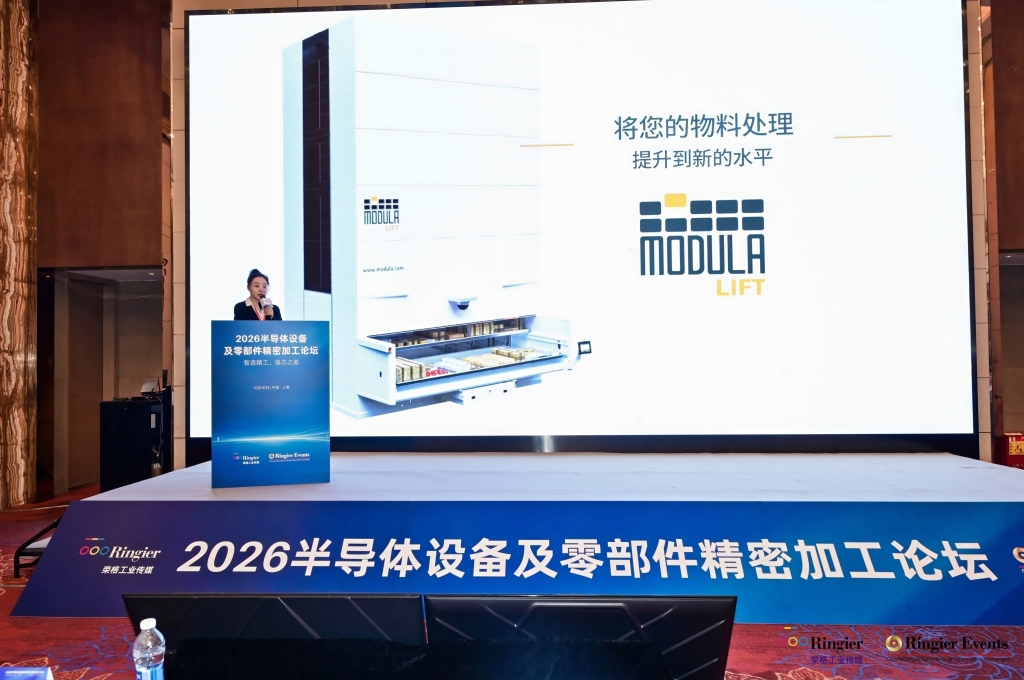
Keynote Sharing: Strengthening Delivery Reliability with Intelligent Warehousing
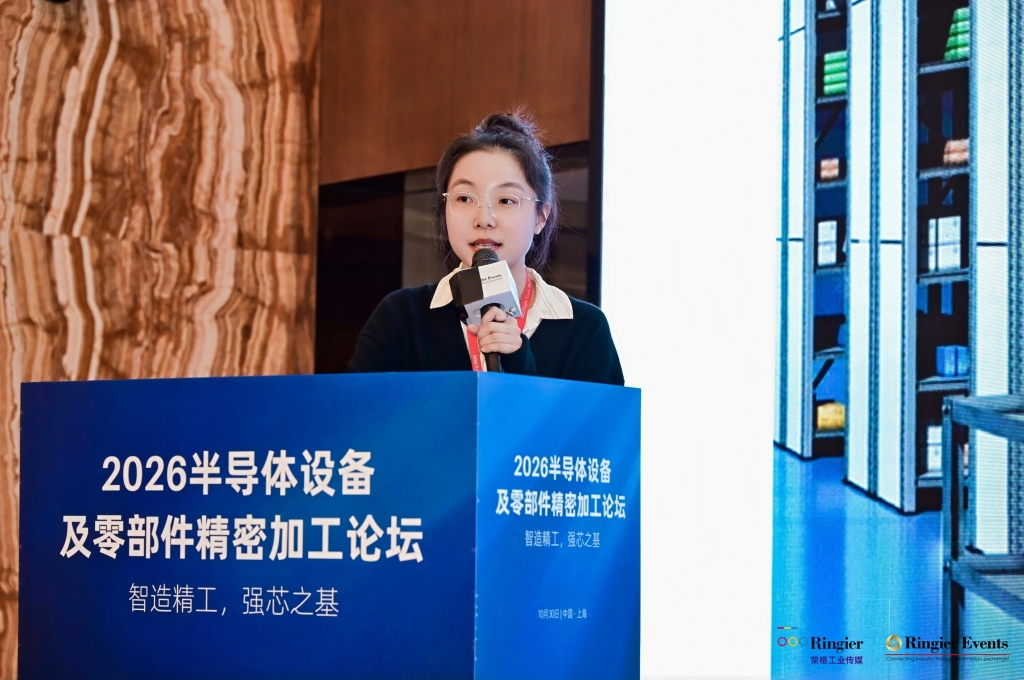
During the event, Tina, Sales Director of Modula, delivered a keynote speech titled “Strengthening Delivery Reliability with Intelligent Warehousing — A New Path for Semiconductor Manufacturing Material Management,” sharing the application value of intelligent vertical storage in improving material storage and picking management based on the practical challenges of semiconductor material management.
In Tina’s speech, Modula focused on these specific and real management needs: making intelligent warehousing more than just storage, but an important part of improving material management efficiency and supporting production operations.
Q1 Given the wide variety of materials with different specifications, how can storage space be reasonably planned?
Modula vertical lift modules provide enterprises with a more intensive storage approach through the utilization of vertical space, helping to optimize material layout within limited space and supporting the categorized storage and management of multiple material types.
Q2 In high-mix, low-volume application scenarios, material searching and picking often involve a large number of details. How can unnecessary searching and back-and-forth movement be reduced to make operational processes clearer?
Modula vertical lift modules help enterprises optimize material positioning and retrieval processes through systematic storage and picking methods, creating conditions for improving picking efficiency and reducing the risk of human error.
Q3 Semiconductor manufacturing places higher demands on the level of refinement in material management. Beyond the storage of materials themselves, are operational processes standardized and is material retrieval orderly?
Through the combination of intelligent warehousing equipment and corresponding management processes, enterprises can further promote the standardization of material storage and picking operations, providing clearer and more orderly operational methods for daily warehousing management.
From storage space to picking operations, from material positioning to process management, the value of intelligent warehousing is reflected not only in the improvement of individual stages, but also in providing support for enterprises to build a more efficient and standardized material management system.
Dedicated Booth: Showcasing the Charm of Intelligent Warehousing Up Close
In addition to the keynote speech, Modula also set up a dedicated booth at the forum, showcasing Modula’s intelligent warehousing solutions to attending guests and industry customers, and sharing application experience of vertical lift modules in high-mix, low-volume material management scenarios.
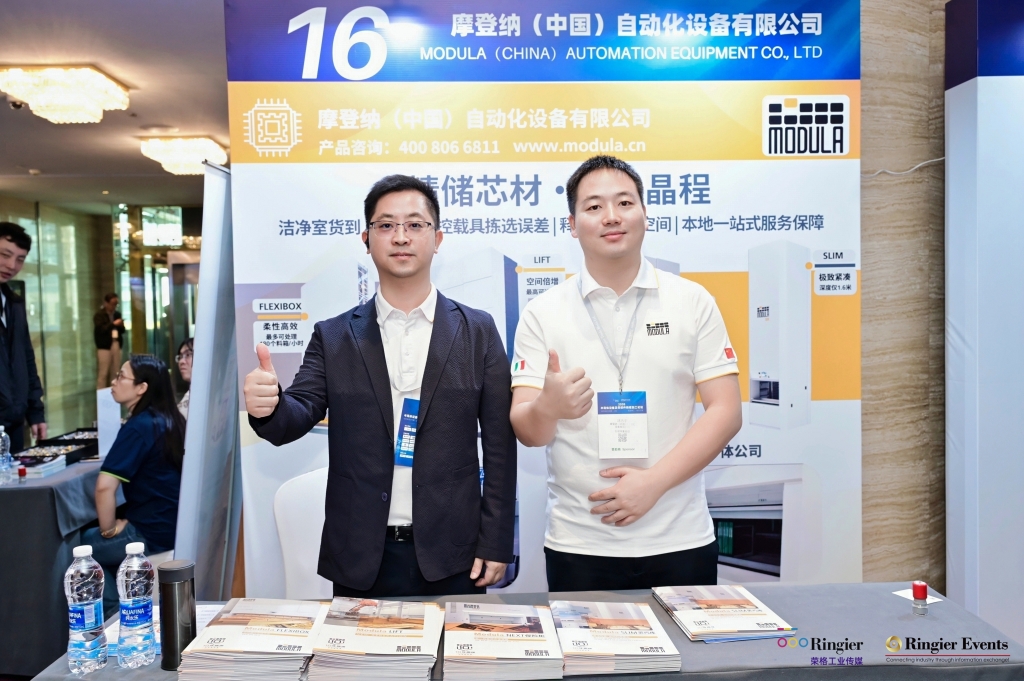
From the efficient utilization of vertical space to the optimization of material storage and picking processes, Modula hopes to enable more industry partners to gain an in-depth understanding of the value that intelligent warehousing technology can bring to semiconductor manufacturing through face-to-face communication.
The keynote speech conveyed the solution, while the dedicated booth presented the brand’s strength. By combining online concept sharing with offline exchange and display, Modula further narrowed the distance between intelligent warehousing technology and practical industry applications, creating more possibilities for future exchange and cooperation with industry chain partners.