



Are you considering upgrading to automated storage with a Vertical Container (VC) system or a Vertical Lift Module (VLM)?
Choosing the most appropriate technology for your business can be a challenge – that’s why we’re here to help you sort out the differences between VC and VLM.
In this article, we will discuss the differences in mechanical structure, operation and cost between vertical rotating containers and vertical lifting modules to help you make an informed choice.
Vertical Rotary Container (VC) and Vertical Lift Module (VLM): Overview
While vertical carousels (VCs) and vertical lift modules (VLMs) are both automated storage and retrieval systems (ASRS) designed to optimize space and improve warehouse efficiency, they operate in different ways.
Let’s start with the vertical rotation of the container.
Developed in the 1950s, the VC system works like a Ferris wheel, storing small items on pallets attached to a rotating chain.
This system is primarily designed for items of similar size and weight and is also known as a “carousel” or “vertical carousel system.”
Vertically rotating containers can minimize floor space and are ideal for use in sites with limited space. Its exit port is located at an ergonomic height, reducing the need to bend or climb, thereby reducing potential safety hazards in the warehouse.
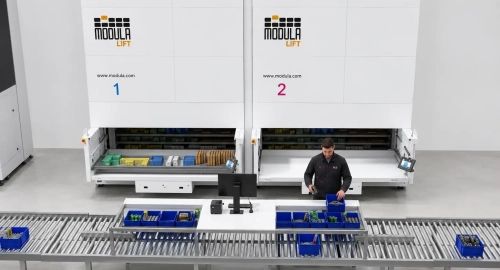
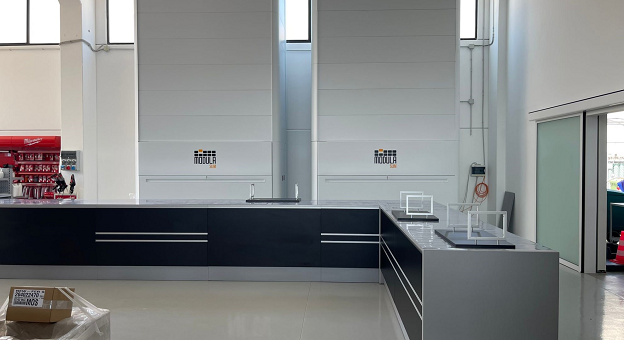
In contrast, the vertical lift module adopts a more advanced design and looks like a vending machine, eliminating the need to rotate the entire contents when accessing items.
VLM follows the “goods to person” principle. The pick-and-place robotic arm inside selects a specific pallet, brings it to the discharge port, and then returns it to its original position.
This design enables warehouse personnel to obtain items quickly and efficiently, reducing the time and physical effort required to pick up items.
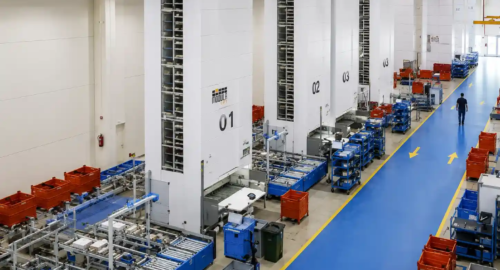
Vertical lift modules offer significant advantages in most applications – not only do they save space, but they can also carry heavier items such as pallets.
It is equipped with a height detection system that measures the height of goods in real time when pallets are stored, thereby optimizing storage density.
In addition, VLM automatically adjusts pallet spacing based on the size of stored items, using vertical space more efficiently than VC systems.
Key differences between vertical rotating containers and vertical lifting modules
The main difference between VC and VLM is reflected in their storage structure and access methods, including the following aspects:
storage capacity
- Height and depth:Vertical lift modules can reach up to 100 meters, while VCs typically have a maximum height of around 32 meters due to balance limitations. In terms of floor space, VLMs typically range in depth from 10–18 m, while VCs typically have a maximum depth of 5 m. VLM also enables higher storage density by dynamically adjusting pallet heights.
- Load capacity:The VLM can carry heavier loads, with a maximum load capacity of up to 998kg per pallet; in comparison, the VC has a maximum load capacity of approximately 635kg per carrier and is better suited for lighter SKUs.
Efficiency and speed
- Picking speed:VLM only needs to move the required pallets when picking up goods, and the picking speed is faster; while VC requires the entire system to rotate to find the corresponding items.
- Installation and maintenance:VLMs ship as modular components and typically take just two days to install, while VCs are monolithic structures that typically take four days to install.
Application scenarios
- Vertical rotating container (VC):Ideal for environments where ceiling height is limited and items are of similar size and weight. Commonly used where quick access to lightweight items is required, such as medical distribution or component storage.
- Vertical Lift Module (VLM):Suitable for high-rise warehouses and can efficiently handle inventory of various sizes and weights. Particularly suitable for locations where heavy items need to be managed, such as industrial parts or bulk materials. This is especially important for businesses with frequent inventory turnover or seasonal changes in product assortments.
cost
- Vertical rotating container (VC):Its cost is affected by factors such as size, functionality, transportation, installation and maintenance. New systems typically cost between A$96,500–A$129,000, and used equipment A$48,000–A$64,000. However, older systems may have technical backwardness issues. In addition to the acquisition cost, installation also needs to consider power cabling and software integration, with the average installation cost around A$16,000.
- Vertical Lift Module (VLM):Prices start at around AU$121,000, with the final price depending on factors such as accessories, size and software requirements. Although the upfront cost is comparable to that of VC, VLM is more efficient and adaptable and has better long-term returns. Installation of a VLM is typically simple, with costs starting from A$19,300, including equipment installation, software setup, system integration and basic staff training.
How to choose Vertical Lift Module (VLM) or Vertical Rotating Container (VC)?
When choosing between VC and VLM, ask yourself the following questions to determine which system best meets your operational needs:
1. Do you want to make more use of your vertical space?
A survey shows that 36% of respondents believe that “insufficient inventory space” is the main problem in warehouse operations.
If you’re looking to maximize warehouse space, choose a VLM system, which optimizes vertical storage and dynamically adjusts pallet heights based on SKU size.
2. Do you need frequent access to inventory?
If your operation requires frequent access to a wide variety of items, VLM is more suitable.
For example, if you run a distribution center that handles a wide range of merchandise, from electronics to apparel, VLM can help warehouse workers complete picking operations efficiently.
3. How high is your requirement for operation speed?
VLM is recommended in environments where time-sensitive, fast pickup affects the overall process.
It operates quickly and can access multiple items from different pallets at the same time.
This is particularly valuable in scenarios such as automotive assembly lines or pharmaceutical distribution, where quick pickup can significantly improve overall efficiency.
4. What is your budget?
VLM is ideal if you have a larger budget and are looking for a long-term, efficient and adaptable solution.
For example, a manufacturing company that stores high-value items can leverage the advanced capabilities and flexibility of VLM to prevent theft.
Find the leading vertical lift module (VLM) at Modula APAC
At Modula APAC, we offer automated vertical lift modules that expand your warehousing capacity through efficient use of ceiling space.
Our systems ensure warehouse staff can easily access inventory while keeping goods safe.
If you want to upgrade your warehousing capabilities and improve operational efficiency, we offer a variety of VLMs, including:
- Modula Lift: Our most popular lift module, available in a variety of sizes and load-bearing options, helps businesses modernize their processes.
- Modula Slim: Using the same advanced technology as the Lift, the Modula Slim offers the same efficiency and picking accuracy, but in a more compact design. Suitable for storing single pieces of material and smaller items such as boxes, boxes, spare parts, coils, bottled products, etc.
- Modula Next: Modula NEXT is our new generation lift module with advanced safety controls for automated warehouse picking. Its outlet will only open the target cargo space, effectively avoiding picking errors and item loss.
Contact our team to learn how our innovative vertical lift modules can help improve the efficiency of your warehouse operations.

Vertical Carousels (VCs) vs. Vertical Lift Modules (VLMs)
Are you thinking about upgrading to automated storage with a vertical carousel (VC) system or vertical lift module (VLM)?
Choosing the best technology for your business can be challenging—that’s why we’re here to help clarify the differences between VCs and VLMs.
In this article, we’ll explore the mechanical, operational, and cost differences between vertical carousels and vertical lift modules to help you make an informed decision.
Vertical Carousels (VCs) vs. Vertical Lift Modules (VLMs): An Overview
Though both vertical carousels (VCs) and vertical lift modules (VLMs) are automated storage and retrieval systems (ASRS) designed to optimise space and improve warehouse efficiency, they operate differently.
Let’s start with vertical carousels.
Introduced in the 1950s, vertical carousel (VC) storage systems operate like a Ferris wheel by storing small items on trays attached to a rotating chain.
Designed primarily for items of similar size and weight, vertical carousel storage systems are also called “storage carousels” or “vertical rotating shelf systems”.
Vertical carousels minimise the storage footprint, making them ideal for facilities with limited floor space. They present items at an ergonomic height. This reduces the need to bend or climb and decreases potential warehouse hazards.
On the other hand, vertical lift module storage systems use a more advanced design resembling a vending machine and retrieve items without rotating all of their contents.
A vertical lift module follows the goods-to-person principle. An inserter/extractor mechanism selects individual trays, delivers them to a bay, and then returns them to their positions.
This allows warehouse operators to access items quickly and efficiently, reducing time and effort for easy inventory retrieval.
Vertical lift modules offer notable advantages for most applications — they save space and manage heavier products, such as pallets.
They feature a height-detection system that measures product height on a tray as it stores, allowing the system to streamline storage density in real time.
Moreover, vertical lift modules maximise the use of available vertical space more efficiently than vertical carousels by automatically adjusting spacing between shelves based on the size of the stored items.
Vertical Carousels (VCs) vs. Vertical Lift Module (VLM) Storage Systems: Key Differences
Vertical carousels and vertical lift modules primarily differ in their storage mechanics and accessibility features, including:
Storage Capacity
- Height and Depth: Vertical lift modules can reach heights of 20 to 30 meters, while VCs typically max out at around 32 meters due to balance issues. In terms of footprint, VLMs are typically deeper (10-18 meters) compared to VCs (up to five meters deep). VLMs also provide higher storage density by dynamically adjusting tray heights.
- Load Capacity: Vertical lift modules can handle heavier loads, with individual trays capable of supporting up to 998 kilograms. In contrast, VCs usually have a maximum capacity of about 635 kilograms per carrier, making them more suitable for lighter SKUs.
Efficiency and Speed
- Picking Speed: Vertical lift modules provide faster retrieval, as they only move the required tray. On the other hand, vertical carousels require the entire system to rotate.
- Installation and Maintenance: Vertical lift modules (arriving in modular sections) typically take just two days to install. Alternatively, vertical carousels (being one solid unit) require up to four days to install.
Applications
- Vertical Carousels: Vertical carousels are best suited for environments with limited ceiling height or where items are similar in size and weight. They are often used in settings where lighter items require quick access like medical distribution or component storage.
- Vertical Lift Modules: Vertical lift modules are ideal for warehouses with high ceilings, efficiently handling diverse inventory sizes and weights. They are also particularly beneficial for operations managing heavy items, such as industrial parts or bulk materials, making them essential for facilities with frequent inventory turnover or seasonal shifts in product types.
Costs
- Vertical Carousels: Size, features, delivery, installation, and maintenance all play a role in vertical carousel storage system costs. New systems typically range from AUD 96,500 to 129,000, while used models cost between AUD 48,000 and 64,000. However, older models may come with outdated technology. In addition to the purchase price, consider installation costs. This covers electrical setup and software integration, with installation costs averaging approximately AUD 16,000.
- Vertical Lift Modules: VLMs start at approximately AUD 121,000, with final costs depending on factors such as accessories, unit dimensions, and software requirements. While upfront costs are comparable to vertical carousels, VLMs offer better long-term value due to enhanced efficiency and adaptability. Generally, VLM installation is less complex and starts at AUD 19,300. This cost includes unit installation, software setup, integration, and basic staff training.
Choosing Between a Vertical Lift Module (VLM) and Vertical Carousel (VC): Which Is Right for You?
When choosing between a VC and a VLM, ask yourself the following questions to determine which best suits your operational needs:
1. Do you want to take advantage of vertical space?
A survey revealed that 36% of respondents identified insufficient inventory space as a major challenge for warehouse operators.
To maximise your facility’s space, count on VLMs to optimise vertical storage and dynamically adjust shelf heights based on the SKU’s dimensions.

2. How often do you need to access items?
VLMs are the way to go if your operations require frequent access to a diverse range of items.
For example, if you run a distribution centre that handles a range of products—from electronics to clothing—a VLM can help your warehouse operators quickly and efficiently retrieve items during order picking.
3. What operational speed do you need?
In environments where time is crucial and rapid retrieval impacts workflow, consider vertical lift modules.
They operate at high speeds and allow access to multiple items from different shelves simultaneously.
This is especially beneficial in settings like automotive assembly lines or pharmaceutical distribution, where saving time on item retrieval can significantly boost efficiency.
4. What is your budget?
If you have a larger budget and seek a long-term, efficient, and adaptable solution, investing in a VLM is an excellent choice.
For instance, a manufacturing facility that stores high-value items can use the VLM’s advanced features and flexibility to prevent theft.
Find Cutting-Edge Vertical Lift Modules (VLMs) at Modula APAC
At Modula APAC, we provide automated vertical lift modules that expand your warehouse space by efficiently utilising your available ceiling height.
Our systems ensure your warehouse staff can easily access inventory, all while keeping goods stored in a safe and secure environment.
If you want to upgrade your storage space and improve operational efficiency, we offer a range of vertical lift modules, including:
- Modula Lift: Our most popular vertical lift module, Modula Lift, comes in a variety of sizes and capacities, helping businesses streamline and modernise their operations.
- Modula Slim: Modula Slim incorporates the same innovative storage technology as the Lift model, delivering equivalent advantages — greater efficiency and increased picking precision — in a more space-saving design. It’s perfect for storing individual materials and smaller items, such as boxes, bins, spare components, coils, bottles, and more.
- Modula Next: Modula NEXT, our next generation lift module, is equipped with advanced safety controls for automated warehouse picking. Its expertly designed bay opens only to the designated compartment, eliminating picking errors and item loss.
Reach out to our team to understand how our innovative vertical lift modules can streamline your warehouse operations.
![Unlocking Efficiency With Vertical Lift Modules [Benefits & FAQs]](https://en.modula.cn/wp-content/uploads/2025/06/vertical-lift-modules-hero-image-500x270-c-center.webp "Unlocking Efficiency With Vertical Lift Modules [Benefits & FAQs]")