








Whether it’s ensuring customers receive accurate orders, From employee safety in the workplace to inventory theft prevention, following warehouse management best practices can help you increase productivity, improve safety and streamline operations.
From batch picking and preventive maintenance to smart storage and automation solutions, we’ll share tips, tricks and tools you can implement to make your warehouse more efficient.
Warehouse Management, Best Practices for Improving Productivity
Picking is a critical process in the warehousing industry, and the speed and efficiency of the process can impact customer satisfaction and the bottom line.
1. Review your SKU types and operations and current order fulfillment operations
The first step in planning an efficient warehouse is to analyze how all SKUs (smallest stock keeping units) in the current warehouse are operated and run.
accurate SKU analysis Numerous important details will be revealed about the types of products being stored, such as size, configuration, location, replenishment quantities and timing.
on the other hand, Detailed order overview It is also a key factor that can have a significant impact on picking productivity. These order profiles include things like commonalities of SKUs in a batch of orders, SKU and carton size ranges, batch line numbers, batch capabilities, estimated pick rates and replenishment procedures. This information determines the number and ratio of cartons as well as picking and packing requirements.
Review SKU types and order profiles:
- Analyze the turnover speed of each SKU, Determine which products have slow turnover and which products are in high demand
- Place fast-turning, popular SKUs in an easy-to-pick area, close to the shipping area. This will speed up the order preparation process. Consider storing this type of product in an automated storage system to optimize picking and replenishment times.
- Frequently analyze SKU type and velocity. Some businesses may have unusual peaks in demand on specific days of the week or peak demand periods.
- Group inventory by SKU’s velocity, size, seasonality and storage requirements
- Group frequently picked SKUs together, placed in the same storage area.
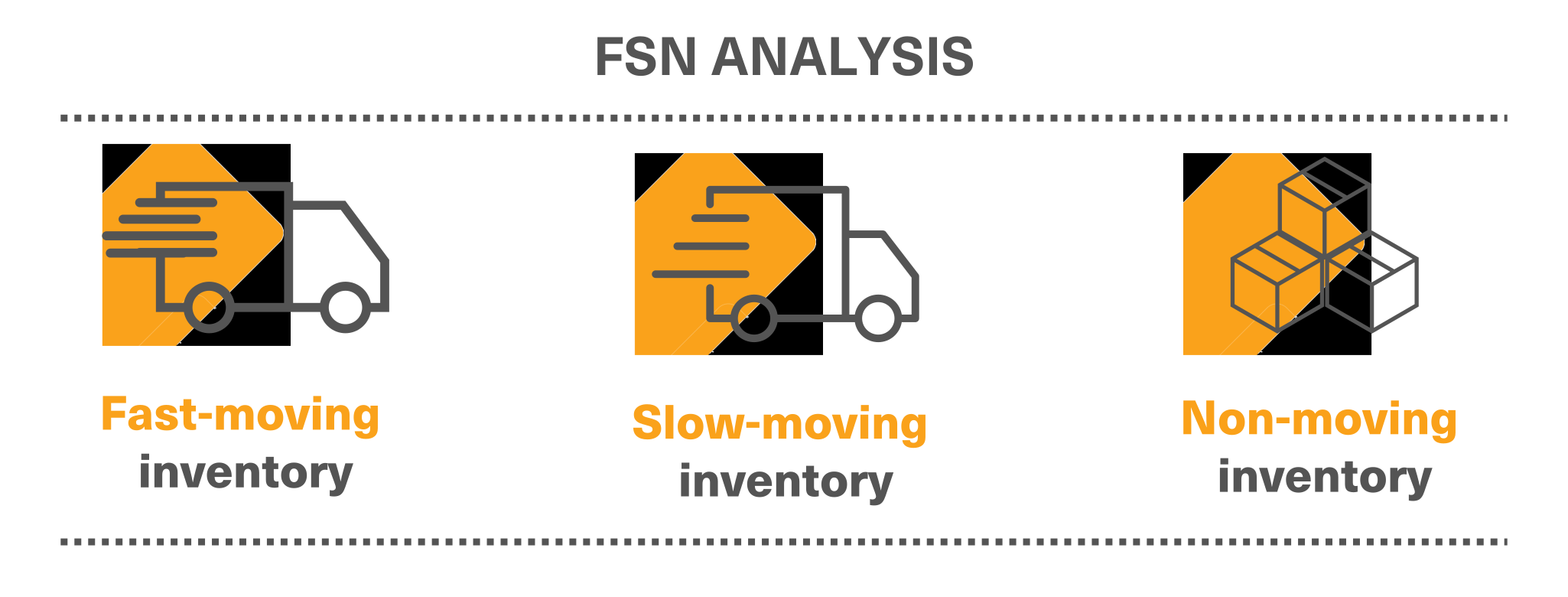
Analytics is an inventory management technique that classifies inventory into three categories based on utilization, consumption, and average dwell time
2. Implement batch picking
Batch picking or multiple order picking is a method that allows operators to pick multiple batches or orders at the same time.
To implement batch picking, you need:
- Create a picking list listing the items that need to be picked up, along with their location and quantity.
- Group identical items in each batch
- Integrate warehouse management systems to further streamline processes
3. Leverage band picking to process priority orders
Band picking or batch picking is a form of picking that allows employees to pick orders simultaneously based on shipping deadlines, carrier types, or warehouse areas, improve efficiency and save time.
With band picking, employees receive a picking list that includes priority orders that need to be picked and sent off for packaging. Employees then pick the items, with each wave consisting of 4-12 orders.
Unlike batch picking, where employees pick orders in batches based on the same products and quantities, Band picking focuses on shipping date – making it an ideal picking method for orders with tight shipping deadlines.
To implement band picking, you need:
- Group orders based on priority shipping, carrier, or similar products
- Create a picking list with each warehouse picker responsible for 4-12 orders
- Assign a warehouse picker to each order
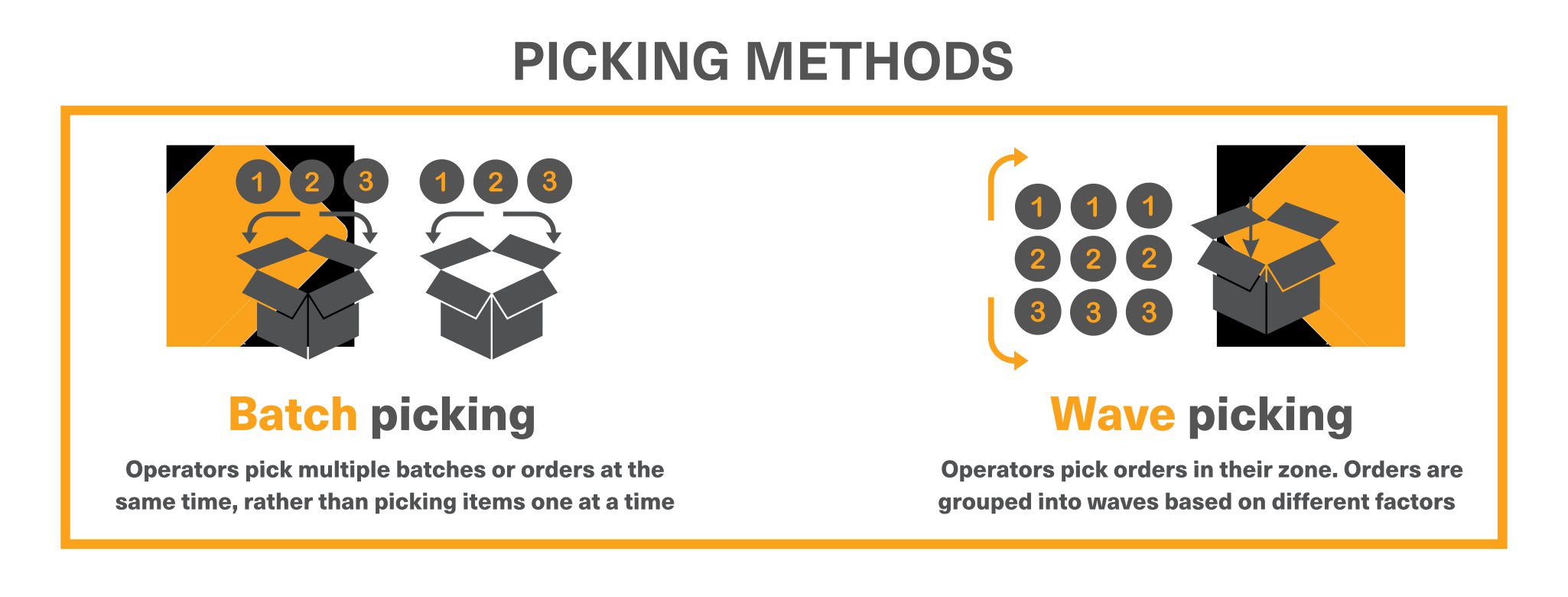
Ways to Improve Warehouse Productivity: Batch Picking or Band Picking
Warehouse Safety Management Best Practices
Ensuring a safe workplace is critical not only for your employees, but also for your brand reputation and bottom line. Improving warehouse security includes:
1. Ensure the working environment is ergonomic
Warehouse employees’ daily tasks often include picking goods from tight spaces and lifting heavy products, which can lead to workplace injuries.
In fact, overwork ranked as the top disabling workplace injury in the United States in 2021.
Integrating ergonomic principles and vertical lifts can help prevent injuries in the workplace.
To ensure your warehouse is an ergonomic environment, you need to:
- Store items strategically by placing heavy items below your waist and storing frequently picked items at eye level.
- Integrate ergonomic vertical lift bins to transport items to warehouse operators at a comfortable height.
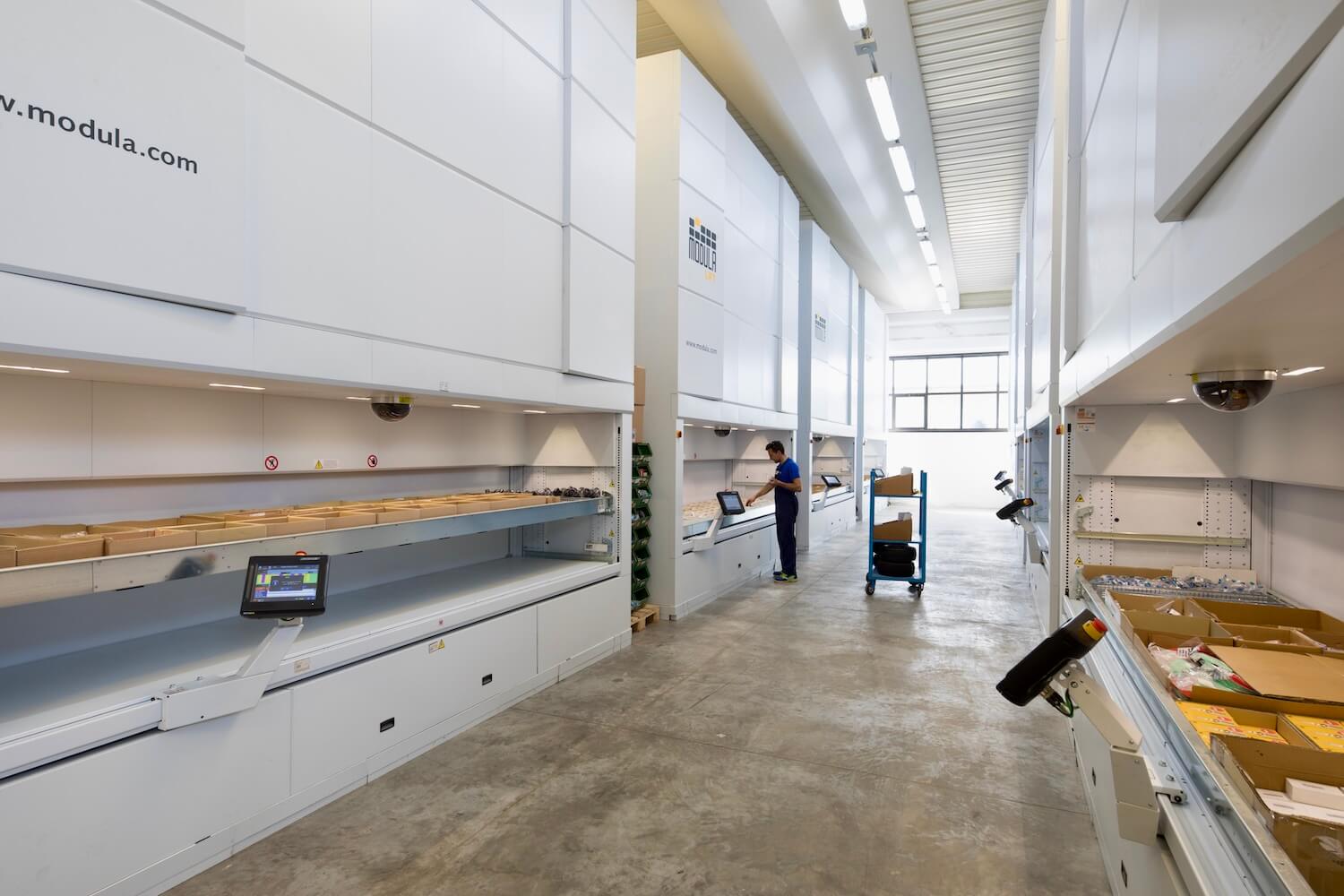
Automated storage and retrieval systems deliver items to warehouse operators at a comfortable height.
2. Use signage and labels
Use signage and labels in the warehouse to ensure employees take appropriate precautions and avoid safety hazards
Signage throughout the warehouse may include exit signs, machine safety instructions, protective gear and product labels highlighting hazardous chemicals.
Using signage and labels in the warehouse:
- Make sure signage is clear and easy to understand
- Standardize signage by color – for example, red for safety warnings, yellow for traffic signs
Best Practices for Warehouse Management Inventory Management
From inventory theft protection to preventing out-of-stock situations, here are the best practices to follow for managing warehouse inventory:
1. Replenish inventory
Inventory replenishment helps prevent stockouts, unavailable inventory, out-of-stock items, or certain items missing from shipments.
In order to restock your inventory you will need:
- Utilize safety stock, also known as extra inventory, to prevent stockouts.
- Get accurate demand forecasts for fast-moving items sold during peak seasons like Black Friday and Christmas.
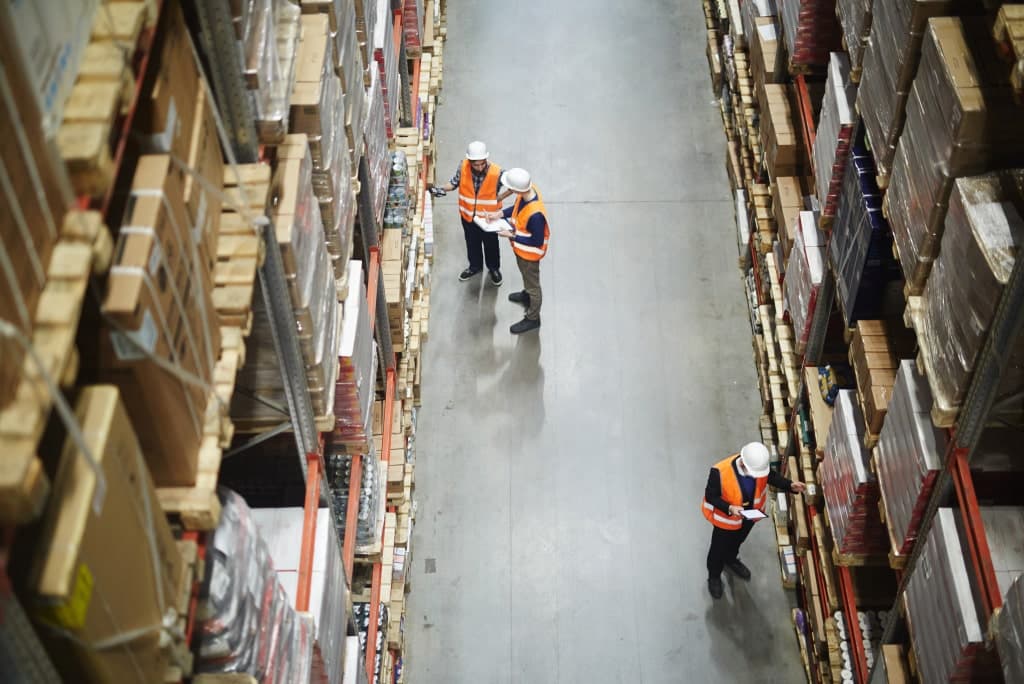
Replenish your inventory regularly to ensure you have product available at any time or season
2. Protect goods from theft
Whether you are a small business or a large enterprise, theft can occur whenever security measures are lacking.
In fact, even retail giants Amazon has also experienced warehouse thefts.
To protect warehouse goods from theft, you need to:
- Monitor employees
- Enter the storage area to set permissions
- Use warehouse management software to manage the flow of goods
- Protect goods in a closed and secure environment with automated storage
Organizational Best Practices in Warehouse Management
From maximizing available space to using bins, here’s how to organize goods in your warehouse.
1. Make use of containers, cabinets and drawers
Whether storing small parts or organizing items into categorized inventory, bins, cubbies and drawers allow employees to quickly and accurately identify and retrieve items.
Make use of the bins, cubbies and drawers in your warehouse:
- Determine the type of container required
- Store products according to size
2. Use vertical lifting to save space
According to a recent report, By 2025, U.S. companies will need 27 million square meters of additional warehousing space to meet rising e-commerce demand.
This extra warehouse space may cost around $0.70 per square meter, but utilizing vertical space can help you save money while maximizing your space.
To take advantage of your vertical height and save space, install a Modula vertical lift container—we have options available! Modula!
3. Make full use of warehouse consolidation
Warehouse consolidation is the process of consolidating orders in a consolidated warehouse or logistics facility. When storing goods for delivery, you can clear excess inventory from your current warehouse.
Best Practices for Warehouse Management and Maintenance
When it comes to warehouse maintenance, best practices can help you catch safety hazards early and save on costly repairs. Here’s what to add to your management checklist to make maintenance easier.
1. Perform preventive maintenance on warehouse equipment
Replacing warehouse equipment is expensive. For example, a brand new electric forklift ranges from $20,000 to $45,000. The best way to prevent the need for a complete replacement is preventive maintenance.
Regular inspections of warehouse equipment allow you to pinpoint problems when they arise so you can plan for more cost-effective repairs before they become larger problems and lead to expensive replacements.
In addition to saving money, preventive maintenance helps eliminate unscheduled downtime in warehouse operations.
To perform preventive maintenance on warehouse equipment, you need to:
- Establish a detailed warehouse equipment inspection list, including checking compliance OSHA Standard device security
- Schedule preventive maintenance inspections based on equipment (for example, electric forklifts should be inspected daily, before and after use).
- Compile detailed reports to track equipment status
2. Conduct regular warehouse audits
A warehouse audit is a to-do list performed by the warehouse manager to ensure the efficient operation of the warehouse.
A warehouse audit can be applied to audit any process in the warehouse, whether it is inventory, shipping or procedures.
To conduct a warehouse audit, you need:
- Create a warehouse audit checklist that includes checking inventory, policies and procedures, and shipping and logistics, among other points.
- Conduct audits every few weeks or quarterly
Modula’s warehouse management automation solution
From saving space and protecting inventory to increasing production and ensuring an ergonomic workplace for employees, We take warehouse management to the next level with state-of-the-art automated storage and retrieval systems.
1. Vertical lifting container
Whether maximizing warehouse height space or providing an ergonomic solution for your employees, our three-dimensional container solutions provide the following benefits:
- Improved by 300 lines per hour or above picking speed
- Protect cargo through a closed system, Restrict access to unauthorized employees.
- through easy-to-use Copilot console automatically obtains items
- By logging and tracking Picking operations to manage complete inventory visibility
- Employees no longer need to climb escalators. Improve employee safety
- By taking advantage of vertical height, Save 90% of floor space
Modula offers 2 different vertical lift containers:
- Modula Lift, Our most popular containers
- Modula Slim, We provide the most compact storage solutions for warehouses with limited space
Watch Modula Lift in action
2. Horizontal rotating container
When ceiling height is limited, Our horizontal rotary containers Can be used as the best storage solution.
In addition to monitoring picking operations in real time, eliminating unnecessary movement in the warehouse and providing employees with the ideal workplace, our horizontal carousels also allow you to:
- Through high density and compact Storage area to store more goods
- Leverage console features to quickly and accurately Pick items
- use Our Modula warehouse management system increases accuracy and productivity
- Ensure 99% picking with our barcode readers and seed display systems Accuracy
- Increase picking rates to up to 550 per operator per hour OK
Watch the Modula horizontal slew container in action
3. Warehouse order picking solution
Whether processing batches and multiple orders or directing warehouse employees to the exact location, our order picking solutions can streamline your picking operations.
Modula warehouse order picking solutions include:
- Modula sowing type Displays guide warehouse workers to exact locations
- Mobile picking station Able to process large quantities of orders in a short period of time
- Modula picking cart Used to transport inventory to different locations within the warehouse
- Modula mobile picking app Manage manual picking operations from your tablet or smartphone
Learn more about our picking solutions!
Modula’s automation solutions enable you to implement best practices in warehouse management and streamline operations across the board.
From our advanced sorting solutions to smart storage options, you can increase productivity, safety and organization with Modula!

Whether it’s ensuring that your customers receive accurate orders, your employees are safe in the workplace or your inventory is protected from theft, following best practices in warehouse management can help you increase productivity, safety and streamline your operations.
From batch picking and preventative maintenance to smart storage and automated solutions, we’ll share the tips, tricks, and tools you can implement to make your warehouse more efficient.
Best Practices in Warehouse Management for Productivity
Picking is a key process in the warehousing industry, and the speed and efficiency with which it is carried out can affect everything from customer satisfaction to your bottom line.
1. Review Your SKU Type and Movement and Your Current Order Fulfillment Operation
The first step in planning an efficient warehouse is to analyse the current operation and the movement of all SKUs (stock-keeping units) within the warehouse.
An accurate SKUs analysis will reveal many important details about the type of products stored, such as size, configuration, slotting, replenishment quantities, and time.
On the other hand, a detailed order profile is a critical factor that can have an important impact on picking productivity. These order profiles include such things as the commonality of SKUs across orders in a batch, SKU and carton size ranges, batch line count, batch functionality, estimated pick rates, and replenishment procedures. This information determines the carton quantities and rates and picking and packing requirements.
To review SKU type and order profiles:
- Analyse the turnover speed of each SKU to determine which products are slow-moving and which ones are high in demand.
- Place fast-moving, popular SKUs in an easy-to-access area, close to the shipping area. This will speed up the order preparation process. Consider storing this type of product in automated storage systems to optimise picking and replenishment time.
- Analyse SKU type and velocity often. Some operations may have unusual spikes of activity on specific days of the week or during peak demand periods.
- Group inventory by SKU velocity, size, seasonality, and storage requirement.
- Combine SKUs frequently picked together in the same storage area.

FSN Analysis is an inventory management technique that divides the inventory into three categories based on the rate of utilisation, consumption, and the average stay.
2. Implement Batch Picking
Batch picking or multi-order picking is a method that allows your operators to pick multiple batches or orders at the same time.
To implement batch picking:
Create a picking list or a document that lists the items that need to be retrieved, along with the location and quantity.
Group the same items in each batch.
Integrate a warehouse management system to further streamline the process.
3. Utilise Wave Picking for Priority Orders
Wave picking or cluster picking is a picking method that allows your employees to simultaneously pick orders based on shipping deadlines, the type of shipping carrier or the warehouse zone, increasing efficiency and eliminating warehouse travel time.
With the wave picking method, an employee receives a picking list which includes priority orders that need to be picked and sent over to packing. The employee then picks the goods, which includes 4-12 orders per wave.
Unlike batch picking where the employee picks orders based on same items and quantity, wave picking focuses on shipping dates — making it the ideal picking method for orders with tight shipping deadlines.
To implement wave picking:
- Group orders based on priority shipping, carrier or like products.
- Create a pick list that includes 4-12 orders per warehouse operator.
- Assign a warehouse operator for each order.

Picking Methods to improve warehouse productivity: batch picking or wave picking
Best Practices in Warehouse Management for Safety
Ensuring a safe workplace is not only vital for your employees, but for your brand’s reputation and your bottom line. To improve safety in your warehouse:
1. Ensure an Ergonomic Environment
A warehouse employee’s routine often includes collecting items from hard-to-reach areas and lifting heavy products, which can lead to overexertion injuries.
In fact, overexertion ranked as the top disabling workplace injury in the United States in 2021.
Integrating ergonomic modules and lifts can help prevent workplace injuries.
To ensure an ergonomic environment in your warehouse:
- Store items strategically by placing heavy items below waist level and storing frequently picked items at eye level.
- Integrate ergonomic modules and lifts to deliver items to your warehouse operators at a comfortable height.

Automated Storage and retrieval Systems deliver items to your warehouse operators at a comfortable height
2. Utilise Signage and Labels
Use signs and labels in your warehouse to note safety hazards and ensure employees take proper precautions.
Signs throughout your warehouse might include those for exit doors, machine safety directions, protective gear, and product labels to emphasise harmful chemicals.
To utilise signs and labels throughout your warehouse:
- Ensure signs are clear and easy to understand.
- Standardise signage through color coordination — For example, use red for safety warnings and yellow for traffic signs.
Best Practices in Warehouse Management for Inventory
From protecting inventory from theft to preventing out-of-stock scenarios, here are the best practices to follow for managing your warehouse inventory:
1. Replenish Your Inventory
Inventory replenishment helps prevent stockouts, unavailable inventory, short picks, or missing items in a shipment.
To replenish your inventory:
- Utilise safety stock, also known as additional inventory, to prevent stock-outs.
- Use accurate demand forecasting for fast-moving items that get sold during peak seasons, such as Black Friday and Christmas

Replenishing your inventory regularly ensures you have products available at any time or season.
2. Protect Goods From Theft
Whether you own a small business or large enterprise, theft can occur when security measures are lacking.
In fact, even retail giant Amazon has experienced warehouse theft.
To protect warehouse goods from theft:
- Monitor your staff.
- Restrict access to storage areas.
- Implement warehouse management software to assess transactions.
- Utilise automated storage to secure goods in an enclosed and secure environment.
Best Practices in Warehouse Management for Organisation
From maximising your available space to using containers, here’s how to organise goods in your warehouse:
1. Utilise Containers, Cabinets and Drawers
Whether it’s storing small parts or grouping items into categorised inventory, storage containers, cabinets and drawers allow your employees to identify and retrieve items quickly and accurately.
To utilise containers, cabinets, and drawers in your warehouse:
Identify the type of container needed.
Store products based on size.
2. Think Vertically to Save Space
According to a recent report, companies in the United States will need 27 million square meters of additional warehouse space by 2025 to keep up with the uptick in eCommerce demand.
While this additional warehouse space can cost around $75 per square meter, going vertical can help you save money while maximising your available space.
To save space using your available ceiling height, integrate vertical lift modules — like the models we offer at Modula!
3. Leverage Warehouse Consolidation
Warehouse consolidation is the process of combining orders in one consolidation warehouse or logistics facility. When you store shipments that are ready to be delivered, you can clear your current warehouse from additional inventory.
Best Practices in Warehouse Management for Maintenance
When it comes to warehouse maintenance, best practices can help you identify safety hazards and costly repairs ahead of time. Here’s what to add to your management list to streamline maintenance:
1. Perform Preventive Maintenance for Warehouse Equipment
Replacing warehouse equipment can be costly. For example, a brand-new electric forklift can range from $20,000 to upwards of $45,000. The best way to prevent the need for a full replacement is preventative maintenance.
Examining warehouse equipment on a regular basis allows you to pinpoint issues as they arise, so you can plan more cost-effective repairs before the issue becomes bigger and results in a costly replacement.
In addition to saving money, preventive maintenance helps eliminate unplanned downtime in warehouse operations.
To perform preventive maintenance for warehouse equipment:
- Create a detailed warehouse equipment checklist that includes inspecting equipment safety that meets OSHA standards.
- Schedule preventative maintenance checks based on the equipment (for example, electric forklifts should be checked every day, before and after use).
- Compile detailed reports to keep track of equipment status.
2. Conduct Regular Warehouse Audits
A warehouse audit is a checklist of to-do tasks performed by warehouse managers to ensure a warehouse is running efficiently.
Warehouse audits can apply to auditing any part of your warehouse, whether it’s your inventory, shipping , or procedures.
To conduct a warehouse audit:
- Create a warehouse audit checklist, including points such as inspecting inventory, policies and procedures, as well as shipping and logistics.
- Perform audits every few weeks or on a quarterly schedule.
Modula’s Automated Solutions for Warehouse Management
From saving space and securing inventory to increasing throughput and ensuring an ergonomic workplace for your employees, we take warehouse management to the next level with the most advanced automated storage and retrieval systems.
1. Modula Vertical Lift Modules
Whether it’s maximising your existing warehouse ceiling height or providing an ergonomic solution for your employees, our vertical solutions provide a wide array of benefits:
- Boost picking speeds of 300 lines per hour or more.
- Secure goods with an enclosed system with limited access for unauthorised employees.
- Obtain items automatically with a user-friendly Copilot controller.
- Manage complete inventory visibility with documented and tracked picking operations.
- Increase employee safety by eliminating the need to reach for items in high or low places.
- Save 90% of floor space by utilising available ceiling height.
At Modula, we offer two vertical lift modules:
- Modula Lift, our most popular vertical lift solution
- Modula Slim, our most compact storage solution for warehouses with limited space coverage.
2. Modula Horizontal Carousels
When ceiling height is limited, our Modula Horizontal Carousels serve as the optimal storage solution.
In addition to monitoring your picking operations in real-time, eliminating unnecessary travel in your warehouse and providing the most ideal workplace for your employees, our Horizontal Carousels allow you to:
- Store more goods with high-density and compact storage areas.
- Pick items quickly and accurately with the digital Copilot feature.
- Boost accuracy and productivity with our Modula Warehouse Management Systems.
- Ensure 99% picking accuracy with our barcode readers and Put to Light Systems.
- Experience picking rates of up to 550 lines per hour for each operator.
3. Modula Warehouse Order Picking Solutions
Whether it’s dealing with batch and multi-orders or guiding warehouse employees to accurate locations, our order picking solutions can streamline your picking operations.
Our Modula Warehouse Order Picking Solutions include:
- Modula Put to Light to guide your warehouse employees to accurate locations.
- Mobile Picking Station for processing large quantity orders in less time.
- Modula Picking Cart for transporting inventory to different locations within your warehouse.
- Modula Mobile Picking App to manage manual picking operations through your tablet or smartphone.
Our automated solutions at Modula allow you to implement best practices for warehouse management and streamline operations across the board.
From our advanced picking solutions to smart storage options, you can improve productivity, safety, and organisation with Modula!

![How to improve order picking accuracy [including ideal ratio]](https://en.modula.cn/wp-content/uploads/2026/04/how-to-improve-order-picking-accuracy-hero-image-800x489-1-500x270-c-center.webp "How to improve order picking accuracy [including ideal ratio]")


