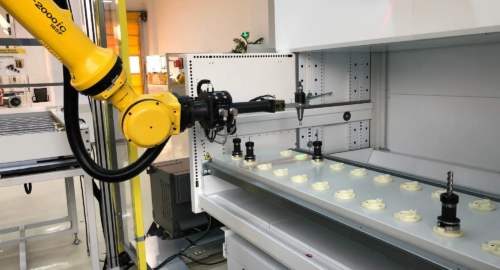








How To Improve Order Picking Accuracy: Key Points
- Most operations aim for an order picking accuracy rate between 96% and 98%
- Arrange inventory to reduce travel distances between frequently demanded items
- Create efficient picking paths to decrease redundant movements
An accuracy rate of 96%-98% is generally seen as the benchmark for effective order picking. If your business achieves this range, further improving your accuracy can give you a competitive edge.
You can do so by strategically arranging inventory, evaluating product velocity, and choosing the correct picking strategy, among others.
In this article, we will:
- Discuss the common challenges that affect order picking accuracy
- Provide tips and tricks on how to improve order picking accuracy
- Explore how Modula APAC’s Vertical Lift Modules (VLMs) can improve your order processes
Common Issues With Order Picking
Before implementing solutions, it’s essential to understand how common order picking problems can impact overall warehouse efficiency and accuracy.
Some frequent challenges include:
- Incorrect item location: Goods may be mislabeled or misplaced, leading pickers to the wrong locations.
- Mispicks due to human error: Fatigue, distraction, or oversight can cause pickers to select the wrong items or quantities.
- Lack of picking prioritisation: Without a structured system to prioritise orders, pickers may handle tasks inefficiently, causing delays and increased handling time.
- Reliance on paper-based systems: Paper picking lists are prone to data entry errors and may contain outdated information.
- Labor-intensive processes: Manual picking can be physically demanding, reducing productivity and increasing the risk of mistakes over time.
How To Improve Order Picking Accuracy
Order picking accuracy (OPA) measures how precisely staff select and prepare items for shipment in warehouses or distribution centres.
This metric plays a critical role in supply chain management and logistics, directly influencing customer satisfaction, return rates, and overall operational efficiency.
Implementing one or more best practices can significantly improve picking accuracy, increase productivity and throughput, and reduce cycle times across operations.
1. Organise Inventory Strategically
Arrange inventory to minimise travel time between frequently picked items. Implement zoning strategies where similar items are grouped together, making them easier to locate and pick.
2. Establish a Receiving Process
Implement a comprehensive receiving and inspection process to improve shipment visibility and scheduling.
Strengthen communication with dock staff by clearly outlining shift expectations, setting firm delivery times with shippers, and establishing defined time-to-unload targets.
Thoroughly inspect, sort, classify, and stage goods for immediate replenishment or storage. This approach helps maintain continuous, delay-free order fulfillment, prevents dock congestion, and boosts overall throughput.
3. Analyse Product Velocity
Track and examine the frequency and volume of picked items to prioritise their placement within the warehouse.
Position high-velocity items closer to packing stations to reduce travel time and boost picking efficiency.
4. Establish Picking Routes
Develop optimised picking routes to decrease backtracking and overlap among pickers. Efficient routes can significantly speed up the picking process and minimise potential errors.
5. Maintain Accurate Inventory Data
Keep inventory records constantly updated and accurate. Employ warehouse technologies like barcode scanning and RFID systems to track inventory levels and locations in real time.
6. Analyse Error Data
Regularly review and analyse picking errors to identify patterns and common issues. This analysis can pinpoint areas for improvement and training needs to prevent future mistakes.
7. Select the Right Picking Strategy
Choose the right picking strategy based on your order volume, as it can directly impact efficiency and accuracy. For large volumes, try batch or zone picking to simplify orders and speed up order fulfilment.
8. Establish Order Accuracy Rate Goals
Without clear direction, order accuracy rates may decline or be overlooked as a key metric.
Start by identifying your current order accuracy rate, then set realistic improvement goals and timelines. For example, if your current accuracy is at 90%, aim to increase it to 95% within the next six months.
If you have a team, clearly communicate these goals and each member’s role in boosting accuracy.
9. Leverage Bins, Totes, and Dividers
Use reusable plastic bins, totes, and dividers to organise inventory on shelves, racks, or automated systems, speeding up item retrieval.
Ideal for small items like nails and washers, these containers maximise warehouse space and lessen search times. In addition, proper labelling ensures quick access and protects contents from dust and grime.
10. Enhance Ergonomics with Goods-to-Person Technology
To enhance warehouse safety, install cushioned floor mats in areas where employees stand for long periods, improve training on proper lifting techniques, and store frequently picked items at waist height.
11. Employ Light-Directed Technology
Integrating light-directed or voice-directed picking systems enables operators to retrieve items quickly and accurately.
Light systems, such as pick-to-light and put-to-light modules, guide pickers using flashing alphanumeric codes and buttons.
Voice systems instruct pickers in their native language, further streamlining the process.
12. Consult Your Staff
Ask your warehouse workers to identify bottlenecks in the picking process, such as inefficient layouts, inadequate shelving, or outdated technology that slows down operations.
Include other supporting employees such as office administrators and equipment operators in these discussions.
13. Avoid Mixing Multiple SKUs in the Same Bin Location
Don’t store multiple SKUs in the same bin location. In many warehouses, a single shelf level holds up to ten different SKUs, requiring employees to sift through various products to locate the correct item.
14. Accomplish Lean Principles
Apply lean principles and conduct regular Gemba walks — a key component of lean management, similar to Management by Walking Around (MBWA).
By observing warehouse processes firsthand, you can gain a deeper understanding of operations and identify inefficiencies within the facility.
15. Streamline Pick Density by Grouping Popular SKUs
Strategically store high-demand SKUs together to increase local pick density. For example, grouping popular items — such as items A, B, and C — can reduce travel time and improve picker efficiency.
This setup allows order pickers to complete more picks within a concentrated area, minimising walking distance and increasing overall productivity.
16. Automate Your Processes
Incorporate automation technologies such as conveyor belts, automated guided vehicles (AGVs), and robotic picking systems to reduce human error and accelerate the picking process. Automation also ensures more consistent and reliable picking.

How To Calculate Your Order Picking Accuracy Rate
Order picking accuracy (OPA) measures how often your shipments contain the correct items. Calculating OPA helps identify error-prone processes and implement corrective actions to meet this key performance indicator (KPI).
To calculate OPA:
Divide the number of orders correctly picked and verified before shipping by the total number of orders picked during the same period. Multiply the result by 100 to express it as a percentage.

How VLMs Improve Order Picking Accuracy
Vertical lift modules (VLMs) can significantly enhance order picking accuracy through several key mechanisms:
- Space optimisation: By utilising vertical space, vertical lift modules condense storage areas more efficiently, allowing pickers to locate items quickly and accurately.
- Automated storage and retrieval: VLMs automate the process, minimising human error by delivering the correct item directly to the access window.
- Better inventory control: Integrated warehouse management systems in VLMs tracks and updates inventory levels in real time, giving pickers accurate information on SKU availability and location.
- Promotes ergonomic benefits: VLMs present items at an optimal height, reducing physical strain and allowing workers to maintain focus and accuracy without distractions from physically demanding tasks.
Reach out to us to discover how VLMs can transform your warehouse operations and boost order picking accuracy.
Order Picking Accuracy: FAQs
What is order accuracy?
Order accuracy gauges how closely shipped items match customer orders, serving as a key metric for assessing the effectiveness and reliability of the order fulfilment process.
Order picking accuracy vs. order accuracy
Order picking accuracy and order accuracy are related but distinct concepts.
Order picking accuracy specifically measures the accuracy of the picking stage, calculating the percentage of error-free picks.
On the other hand, the order fulfilment and delivery process involves multiple stages — picking, packing, labeling, shipping, and last-mile delivery — each susceptible to potential errors. Order accuracy evaluates precision throughout all these stages.
Why is order picking accuracy important?
High order picking accuracy is crucial, as it directly enhances customer satisfaction, lowers return rates, and cuts down on additional shipping costs due to incorrect orders.

How to Improve Order Picking Accuracy: Key Points
- The goal for most operations is an order picking accuracy between96% and 98%
- Arrange inventory to reduce shipping distances between frequently requested items
- Create efficient picking paths to reduce redundant moves
Accuracy96%-98%Often considered the benchmark for efficient order picking. If your business reaches this range, further improvements in accuracy can give you a competitive advantage.
You can do this by strategically arranging inventory, assessing product velocity and choosing the right picking strategy.
In this article we will:
- Discuss common challenges affecting order picking accuracy
- Provide tips and tricks on how to improve order picking accuracy
- Discover how Modula APAC’s Vertical Lift Modules (VLM) can improve your order process
Frequently Asked Questions about Order Picking
Before implementing a solution, it’s important to understand how common order picking issues impact overall warehouse efficiency and accuracy.
Some common challenges include:
- Project location is incorrect: Goods may be mislabeled or misplaced, causing pickers to arrive at the wrong location.
- Wrong choices due to human error:Fatigue, distraction, or negligence can cause a picker to select the wrong item or quantity.
- Lack of picking priority: Without a structured system for prioritizing orders, pickers may handle tasks inefficiently, causing delays and increasing processing time.
- Reliance on paper-based systems: Paper picking lists are prone to data entry errors and may contain outdated information.
- labor intensive process: Manual picking is physically demanding, reducing productivity and increasing the risk of errors over time.
How to improve order picking accuracy
Order picking accuracy (OPA) measures how accurately employees select and prepare items for shipment in a warehouse or distribution center.
This metric plays a key role in supply chain management and logistics, directly impacting customer satisfaction, return rates, and overall operational efficiency.
Implementing one or more best practices can significantly improve picking accuracy, increase productivity and throughput, and shorten operating cycles.
1. Organize inventory strategically
Arrange inventory to minimize shipping time between frequently picked items. Implement a zoning strategy to group similar items together to make them easier to find and pick through.
2. Establish a receiving process
Implement comprehensive receiving and inspection processes to improve shipment visibility and dispatch.
Enhance communication with terminal staff by clearly outlining shift expectations, setting clear delivery times with shippers, and establishing clear unloading time goals.
Thoroughly inspects, sorts, sorts and stores goods for immediate replenishment or storage. This approach helps maintain continuous, delay-free order fulfillment, prevent terminal congestion, and increase overall throughput.
3. Analyze product speed
Track and review the frequency and quantity of picked items to prioritize their placement in the warehouse.
Place high-speed items close to packing stations to reduce travel time and increase picking efficiency.
4. Establish picking routes
Develop optimized picking routes to reduce backtracking and overlap between pickers. Efficient routing can significantly speed up the picking process and minimize potential errors.
5. Maintain accurate inventory data
Keep inventory records updated and accurate. Employ warehouse technology e.g.barcode scanning and RFID systemTrack inventory levels and locations in real time.
6. Analyze erroneous data
Regularly review and analyze picking errors to identify patterns and common problems. This analysis can pinpoint areas for improvement and training needs to prevent future errors.
7. Choose the right selection strategy
Choose the right picking strategy based on your order volume, as it can directly impact efficiency and accuracy. For larger quantities, try batch or zone picking to streamline orders and speed up order fulfillment.
8. Establish order accuracy goals
Without clear direction, order accuracy may decline or be overlooked as a key metric.
Start by determining your current order accuracy, then set realistic improvement goals and timelines. For example, if your current accuracy is 90%, aim to improve it to 95% within the next six months.
If you have a team, clearly communicate these goals and each member’s role in improving accuracy.
9. Utilize bins, totes and dividers
Use reusable plastic bins, totes and dividers to organize inventory on racks, racks or automated systems to speed up item retrieval.
These containers are ideal for storing small items like nails and washers, maximizing warehouse space and reducing search time. Additionally, correct labeling ensures quick access and protects contents from dust and dirt.
10. Use goods-to-person technology to enhance ergonomics
To increase warehouse safety, install cushioned floor mats in areas where employees stand for long periods of time, increase training in proper lifting techniques, and store frequently picked items at waist height.
11. Adopt light guide technology
Integrated light-guided or voice-guided picking systems enable operators to retrieve items quickly and accurately.
Lighting systems, such as light pickup and light placement modules, use flashing alphanumeric codes and buttons to guide pickers.
A voice system guides pickers in their native language, further streamlining the process.
12. Consult your employees
Warehouse workers are asked to identify bottlenecks in the picking process, such as inefficient layouts, insufficient shelving or outdated technology that slows operations down.
Include other support employees such as office administrators and equipment operators in these discussions.
13. Avoid mixing multiple SKUs in the same bin
Do not store multiple SKUs in the same bin. In many warehouses, a single shelf level can hold up to ten different SKUs, requiring employees to sift through a variety of products to find the correct item.
14. Implement lean principles
Apply Lean principles and conduct regular site walks – a key component of Lean management, similar to Management Walk-Around (MBWA).
By directly observing warehouse processes, you can gain a deeper understanding of operations and identify inefficiencies within your facility.
15. Simplify pick density by grouping popular SKUs
Strategically store high-demand SKUs together to increase local picking density. For example, grouping popular items (such as items A, B, and C) can reduce travel time and increase picking efficiency.
This setup allows order pickers to complete more pickings in a centralized area, minimizing walking distance and increasing overall productivity.
16. Automate your processes
Incorporate automation technologies such as conveyors, automated guided vehicles (AGVs) and robotic picking systems to reduce human error and speed up the picking process. Automation also ensures picking is more consistent and reliable.
How to Calculate Order Picking Accuracy
Order Picking Accuracy (OPA) measures how often your shipments contain the correct items. Calculating OPA helps identify error-prone processes and implement corrective actions to meet this key performance indicator (KPI).
Calculate OPA:
Divide the number of orders correctly picked and verified before shipping by the total number of orders picked during the same period. Multiply the result by 100 to express it as a percentage.
How VLM improves order picking accuracy
The Vertical Lift Module (VLM) can significantly improve order picking accuracy through several key mechanisms:
- space optimization: By utilizing vertical space, the vertical lift module compresses the storage area more effectively, allowing pickers to quickly and accurately locate items.
- Automatic storage and retrieval: VLM automates the process, minimizing human error by routing the correct items directly to the access window.
- Better inventory control: An integrated warehouse management system in VLM tracks and updates inventory levels in real time, providing pickers with accurate information on SKU availability and location.
- Promote ergonomic benefits: VLM displays items at optimal heights, reducing physical stress, allowing workers to maintain focus and accuracy without being distracted by physically demanding tasks.
Contact us to learn how VLM can transform your warehouse operations and improve order picking accuracy.
Order Picking Accuracy: FAQs
What is order accuracy?Order accuracy measures how well shipped items match customer orders and serves as a key metric for evaluating the effectiveness and reliability of the order fulfillment process.Order picking accuracy and order accuracy
Order picking accuracyand order accuracy are related but different concepts.
Order picking accuracy specifically measures the accuracy of the picking phase, calculating the percentage of error-free picks.
The order fulfillment and delivery process, on the other hand, involves multiple stages—picking, packing, labeling, shipping, and last-mile delivery—each of which is prone to potential errors.Order accuracyEvaluate the accuracy of all these stages.Why is order picking accuracy important?High order picking accuracy is critical because it directly increases customer satisfaction, reduces return rates, and reduces additional shipping costs due to order errors.