






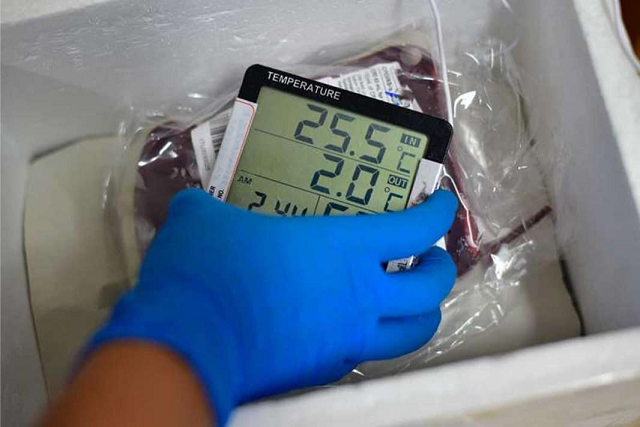
When we talk about cold chain logistics, we are referring to a temperature-controlled supply chain, including the following systems:
- Production
- storage
- Delivery
These systems need to be equipped with appropriate equipment to ensure a constant temperature within the required temperature range to prevent contamination or deterioration of materials or products.
Therefore, cold chain is one of the most complex and costly logistics management processes and is widely used in industries that handle temperature-sensitive products, such as the food, pharmaceutical, electronics, floral and leather industries.
Due to the particularity of products, some key issues in cold chain logistics management make it different from traditional supply chains.
One example is vaccines, as they often need to maintain very tight temperature controls throughout the supply chain, from production to the end user. Failure to maintain temperatures within this temperature range at some point in the supply chain, even for a short period of time, will affect the safety and effectiveness of the vaccine and render it unusable.
1) High cost of temperature control
Some industries involved in cold chain logistics directly impact public health (e.g., agri-food and pharmaceutical industries) and therefore have strict temperature control requirements and supervision of all stages of the cold chain.
In Europe, the reference frame is EC Regulation No. 37/2005, which requires regular measurement and recording of temperatures in transport vehicles and storage locations. This means that transportation methods and warehouses must be equipped with appropriate instruments and equipment to ensure the required temperatures and measure temperature changes in real time.
The specific equipment and huge investments required for cold chain logistics include cold storage, building insulation, temperature control sensors and refrigerated transport. These costs can be up to five times higher than those required for dry cargo transportation and storage, and the energy consumption of cooling systems is also a consideration.
2) Risk of contamination and deterioration
Once the products that require temperature control are contaminated or spoiled, it may cause huge economic losses to the company. For example, in the food industry, the widespread application of cold chain stems from the popularity of large-scale retail and e-commerce. Food products are perishable and if not properly managed and handled, fungi, bacteria and microorganisms can quickly grow. Logistics must also comply with Hazard Analysis and Critical Control Points (HACCP) rules.
Costs associated with material deterioration include both direct and indirect costs, and these costs are primarily incurred during the storage phase.
Once a product is contaminated or rotted, the consequences include:
- Scrap disposal costs
- Higher quality control expenses
- restocking fee
Indirect costs include:
- Loss of reputation and trust
- loss of market share
- Possible disputes arising from claims
To reduce the risk of product contamination and spoilage, and avoid the associated costs mentioned above, it is crucial to take all temperature control measures and use appropriate technical solutions to ensure the integrity of the cold chain.
3) Picking time
Closely related to the above safety risks, picking time in cold chain logistics must be shortened as much as possible to ensure product integrity. Picking is a critical process because products are temporarily taken out of the temperature-controlled environment, and this time must be minimized to ensure product safety and integrity.
When designing a warehouse management system for perishable products, it is important to implement efficient picking strategies and use automated tools to keep products outside the temperature-controlled environment for the shortest possible time.
Solutions to limit cold chain logistics costs
Although the costs and risks of improper management of cold chain logistics are very high, some suitable process and technology solutions can also be adopted to greatly reduce these costs and risks while optimizing organizational efficiency.
These solutions can be applied to the following supply chain stages:
- Production
- storage
- loading
- transportation
- Unloading at a distribution center or retail location
The final stage—picking, storage, and shipping to the end consumer—is usually outside a company’s control, unless it’s an e-commerce business.
1. Automated picking
In addition to safety being paramount, picking is a process that cannot be fully manual. For example, in frozen product storage, temperatures can be as low as minus 30 degrees Celsius.
To prevent thermal shock and product deterioration, modern cold chain logistics centers use humanoid robots for automated picking. Adopt a goods-to-person approach and leverage advanced voice picking technology to enable operators to communicate with supply chain equipment and systems via headsets.
Faster picking and humanoid robots capable of automatically detecting product condition result in significant financial savings.
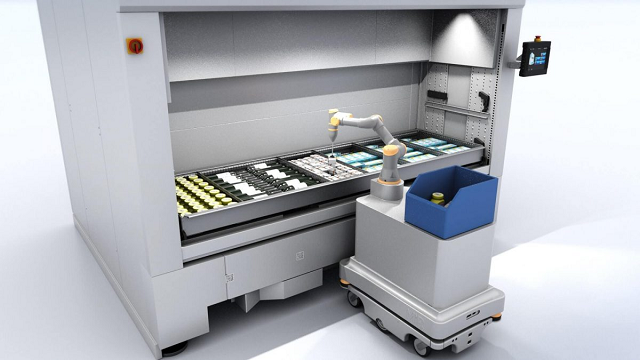
Modern cold chain logistics centers use humanoid robots to automate picking operations
2. Automated vertical temperature-controlled storage system
Cooling warehouses is very costly, especially in terms of energy. Therefore, it is good practice to maximize the use of existing space to reduce energy costs.
The solution to this problem is vertical storage systems, which can save up to 90% of warehouse space. The Modula Lift Climate Control automated storage system ensures temperature control within a range of 2°C to 25°C and combines the advantages of vertical storage systems with the required temperature and humidity levels for safe product storage.
Automated storage systems also reduce costs associated with temperature dispersion by automating pick and place operations.
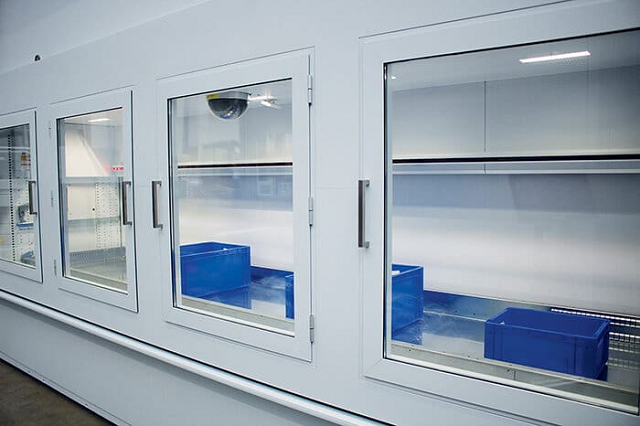
Modula LIFT temperature control management warehousing system
3. Automated material handling in refrigerated warehouses
In temperature-controlled storage systems, automated handling systems are often used to reduce operator time in these areas when storage temperatures are lower.
For example, pallet stacking cranes and pallet shuttles are automated and remotely controlled. The result is improved operational efficiency and speed.
AMR vehicles, robots and all handling systems operating in temperature-controlled warehouses or freezers have special characteristics. Special temperature and humidity conditions may affect operation and may combine to be dangerous.
Such cost reductions are mainly due to reducing energy loss, reducing the risk of exposure of stored products to contaminants, and protecting the health of operators.
4. Cold chain monitoring through sensors and IoT solutions
All the solutions mentioned above are based on modern sensor systems for measuring temperature, position and size, combined with IoT solutions to analyze and evaluate the collected data. Therefore, IoT and sensors help ensure temperature stability in the cold chain and prevent energy wastage.
As demand for such services grows, companies can take advantage of these technological opportunities to maintain cold chains and improve their management efficiency. For example, in the e-commerce or pharmaceutical industries, the demand for products that require temperature control is increasing year by year.
Relevant companies must reorganize their warehousing systems to meet new management requirements, reduce costs, and improve logistics efficiency.

When we talk about cold supply chain logistics, we mean a temperature-controlled supply chain that includes the following systems:
- Production
- Storage
- Distribution
Each of these systems must be supported by equipment bso the materials or products processed and distributed do not undergo contamination or deterioration.
The cold chain is therefore one of the most complex – and expensive – logistics management processes and is used in sectors dealing with products that are sensitive to heat, such as the food, pharmaceuticals, electronics, floriculture, and leather sectors.
Due to the nature of the products, the specific criticalities in the management of cold chain logistics make it different from the traditional supply chain.
One example is vaccines, as they often require a very narrow temperature range throughout the supply chain, from production to the final user. Failure to maintain the temperature within these narrow ranges even for a short time along the chain can affect safety and efficiency, therefore making the vaccines unusable.
1) High costs for temperature control
Some sectors in which cold supply chain logistics is used have a direct impact on public health (for example, the agri-food and pharmaceuticals sectors), and for this reason, temperature control requirements are stringent and regulated for all phases of the cold chain.
The reference framework in Europe is EC Regulation 37/2005, which requires temperatures to be measured and recorded at regular intervals on means of transport and storage sites. This means that both the method of transportation and the warehouses must have suitable instruments and equipment to guarantee the required temperature, as well as measure it over time.
Examples of the specific equipment and significant investments needed for cold logistics are cold rooms, building insulation, temperature control sensors, and reefer transport. The cost for these can be to five times higher than those required for transporting and storing dry products, and the energy costs related to the refrigeration systems are also a consideration.
2) Risk of contamination and deterioration
The contamination or deterioration of products that require a controlled temperature can pose enormous economic implications for a company. For example, the food sector, where the cold chain is increasingly adopted due to the massive presence of large-scale retailing and e-commerce. Food items are highly perishable and fungi, bacteria and microbial growth can easily develop if they are not properly managed and handled. Logistics must also comply with the Hazard Analysis and Critical Control Points (HACCP) rules.
The costs related to the deterioration of materials are both direct and indirect and can be generated throughout the supply chain logistics. These costs are higher in the storage phase, where the temperature is reduced.
When products are contaminated or perish, the consequences are:
- Waste management costs
- Higher quality control costs
- Replenishment costs
Indirect costs, instead, are related to:
- Loss of reputation and trust
- Loss of market share
- Possible disputes due to claims for damages
To reduce the risk of contamination and degradation of products – and thus avoid the associated costs mentioned above – it is critical to implement all temperature control measures and use suitable technological solutions capable of maintaining the cold chain.
3) Picking times
Strictly related to the safety risks illustrated above, picking times in cold logistics must be reduced to a minimum to ensure the integrity of the products being handled. Picking is a key process, as the products or goods are left out of the temperature-controlled environment, and this lapse of time must be minimised to ensure safety and integrity.
When designing a warehouse management system for the storage of perishable products, it is essential to implement picking strategies and to use automation tools, so that the products remain outside the refrigerated environment for the shortest possible time.
Solutions to limit the costs of the cold chain logistics
If the costs related to cold logistics and to its improper management are very high, it is also true that it is possible to adopt processes and technological solutions suited to significantly limit them, as well as all related risks, while at the same time optimising the organisation.
These solutions can be used in the following phases of the supply chain:
- Production
- torage
- Loading of goods
- Transport
- Unloading at distribution hubs or Points of Sale
The last phase — picking, storage, and transport to the final consumer — remains outside the company’s control, unless it is e-commerce.
1. Automated picking
In addition to being a critical phase for safety, picking is also a process in which operators cannot always be involved. This is the case, for example, of frozen product storage, with temperatures as low as -30 degrees Celsius.
In order to prevent thermal shocks and degradation, modern cold logistics centers use anthropomorphic robots to automate picking. The goods-to-person method is therefore adopted, also taking advantage of the more recent voice picking technology, which allows operators to communicate with the supply chain equipment and systems using a headset.
Faster picking and the ability of anthropomorphic robots to automatically detect product conditions translate into significant economic savings.

Modern cold logistics centers use anthropomorphic robots to automate picking
2. Automated vertical temperature-controlled storage systems
Cooling a warehouse is expensive, even in terms of energy. For this reason, it is good practice to take advantage of the available surface area as much as possible in order to reduce energy costs.
The solution to this problem is vertical storage systems, with which it is possible to save up to 90% of the available warehouse space. Modula Lift Climate Control automated storage systems also ensure temperature control in a range of +2 to +25 degrees Celsius, combining the benefits of a vertical storage system with engineering that guarantees the temperatures and humidity levels necessary for the safe storage of products.
An automatic storage system also reduces the costs associated with temperature dispersion, thanks to the automation of picking and placing operations.

Modula Lift Climate Control automated storage systems
3. Automatic handling of solutions in deep freezer cells
In temperature-controlled storage systems, where storage temperatures are low, it is common to use automatic handling systems to reduce the time spent by operators in these areas.
Examples include pallet stacker cranes and pallet shuttles, which are automatically and remotely controlled. The result is improved operational efficiency and speed.
AMR vehicles, robots, and all handling systems operating in temperature-controlled warehouses or deep freezers have different characteristics. The special temperature and humidity conditions can actually affect the operation and combine in such a way that can become dangerous.
The lower costs, in this case, are always due to reduced dispersion of energy, decreased exposure of stored products to possible contaminants, and protection of the health of operators.
4. Cold supply chain monitoring with sensors and IoT solutions
All the aforementioned solutions are based on the most modern sensor systems for the determination of temperature, position, and size, as well as on IoT solutions for analysing and assessing the data collected. Therefore, the Internet of Things and the sensors help to ensure a constant temperature along the cold chain and to prevent energy waste.
Thus, with demand for this kind of service currently growing on the market, it is possible to take full advantage of these technological opportunities to maintain the cold chain and improve its management. Think of e-grocery or the pharmaceutical sector, where the demand for products that need controlled temperatures increases from year to year.
The companies operating in these sectors must therefore reorganise their warehouses, both to meet the new requirements for the proper management of goods and to reduce costs, while at the same time improving the efficiency of their logistics system.
![What is the role of 3PL? [Including order fulfillment process]](https://en.modula.cn/wp-content/uploads/2026/04/3pl-hero-image-800x489-1-500x270-c-center.webp "What is the role of 3PL? [Including order fulfillment process]")


