




Automated storage and retrieval systems (ASRS) are mainly used in manufacturing and distribution centers.
These systems simplify operations by replacing traditional racking architecture, resulting in significant floor space savings, improved employee safety and increased productivity.
This article will introduce the common types of automated storage and retrieval systems (ASRS), guide you on how to choose the ideal warehousing technology for your operation, and show you the advanced ASRS solutions available from Modula Australia.
What is an Automatic Storage and Retrieval System (ASRS)?
An automated storage and retrieval system (ASRS) is an innovative technology that enables the storage, retrieval and delivery of goods to warehouse employees.
The ASRS is computer or robot controlled and replaces large racking areas. This allows ASRS to save floor space, improve workplace safety and increase productivity, among other benefits.
You can customize this automated solution to fit any size requirement with cube storage, robotic systems, carousel racking and shuttles.
Additionally, a warehouse management system (WMS) monitors all of these components to ensure efficient operations.
Who invented automated storage and retrieval systems?
The technology now known as automated storage and retrieval systems (ASRS) originated from Demag, the company that was the predecessor to Dematic.
This innovation laid the foundation for the modern high-rise warehouse and continues to drive optimization of material handling.
Classification of automatic storage and retrieval systems
ASRS technology can be divided into three major categories, mainly distinguished based on its material transmission method:
- Shelf-Based Picking ASRS:The system delivers entire shelves or pallets of goods to warehouse employees.
- Bin-Based Picking ASRS (Bin-Based Picking ASRS):The system delivers individual boxes or totes of goods directly to warehouse operators.
- Robotic Picking:Robots transport inventory to warehouse employees.
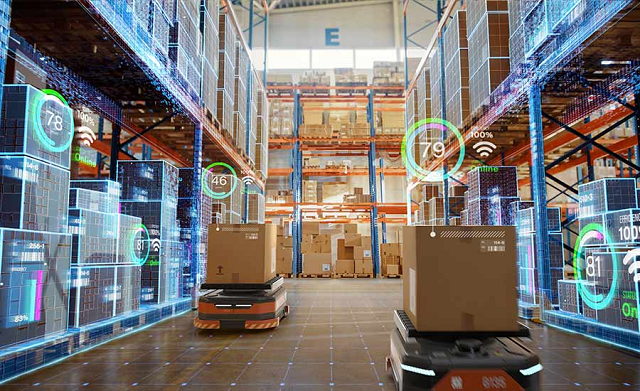
Types of Automatic Storage and Retrieval System (ASRS) Technology
From vertical rotating containers to floor-mounted robots and more, here are the types of ASRS technologies that can help increase throughput and optimize warehouse operations:
- Vertical Carousel Module (VCM):The VCM is an automated storage and retrieval system consisting of vehicles on enclosed vertical circulation tracks within a metal enclosure. It circulates vertically like a Ferris wheel, rotating racks in front of the operator. This solution maximizes vertical space utilization and work efficiency.
- Horizontal Carousel Module (HCM):HCM is an ASRS operating in a horizontal elliptical orbit. It transports items horizontally like a conveyor belt, delivering stored items to warehouse operators. This system makes efficient use of horizontal space and speeds up pickup times.
- Vertical Lift Module (VLM):VLM is based on the “goods-to-person” principle, delivering items directly to warehouse operators. Unlike vertical rotating bins, VLMs feature an advanced design that allows items to be removed individually without rotating the entire inventory.
- Vertical Buffer Module (VBM):Compact automated storage system for vertical buffering and storage of items to optimize space and speed up retrieval.
- Mini-Load ASRS:Also known as bin or carton handling type ASRS, it mainly handles light loads below 35 kg. This system is ideal for storing and retrieving cartons, pallets or bins in smaller facilities with a wide variety of inventory.
- Overload ASRS (Unit-Load ASRS):This system is used for storing and handling large, heavy objects such as pallets and boxes. Can handle loads from 500 to 2500 kg and reach heights of up to 161 metres. Heavy-duty ASRS are divided into two categories: movable tunnel cranes and fixed tunnel cranes.
- Robotic Shuttle-based ASRS:Robotic shuttles are used to transport items automatically and operate at extremely high speeds, capable of handling 200 to 700 production lines per hour. The system can manage bins, pallets or boxes weighing between 16 and 45 kg.
- Cube ASRS (Robotic Cube-based ASRS):Use a three-dimensional grid structure to organize and access items. Items are stored in stacked bins, and intelligent robots move on top of the grid to pick up the items and deliver the bins to workstations.
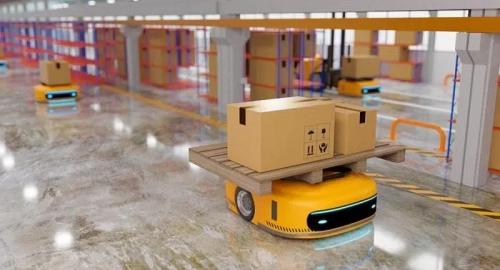
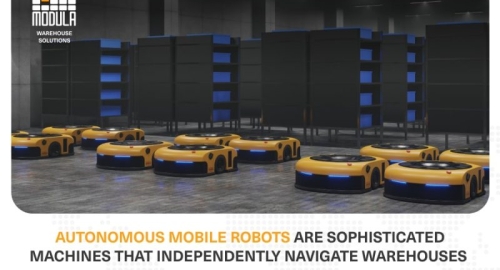
- Ground robot (AGV/AMR):That is, automated guided vehicles (AGVs) or autonomous mobile robots (AMRs) transport inventory in warehouses, increasing efficiency and reducing the distance employees travel. It can be used to transport boxes, boxes and small parts.
- Micro-Load Stocker:Robots move within a dense storage grid, storing and picking up stock totes and transporting them to conveyors or workstations. The system is ideal for warehouse operations that require ASRS for sorting, buffering, and point-of-use feeding.
Key Benefits of Automated Storage and Retrieval Systems
Automated storage and retrieval systems offer multiple benefits that can significantly improve warehouse operations.
Key advantages include:
- Optimization space:ASRS can utilize vertical and horizontal space more efficiently than traditional storage methods, reducing the area required for storage, allowing more products to be stored in a smaller area.
- Improve productivity:ASRS can significantly speed up warehousing processes, enabling faster response times and higher throughput.
- Improve accuracy:ASRS can reduce human errors in the picking and placement process, improve inventory accuracy, and reduce the cost of incorrect picking and returns.
- Enhance workplace safety:ASRS reduces the risk of strain or falls caused by manual retrieval of items, especially from high or hard-to-reach locations.
- Reduce labor costs:ASRS reduces repetitive manual labor, thereby reducing labor costs and mitigating issues such as high turnover rates caused by labor shortages.
- Improve inventory management:ASRS systems are usually integrated with warehouse management systems (WMS) to provide inventory data in real time, thereby improving inventory control and management.
- Improve security:ASRS reduces the risk of inventory theft or damage through access control and automated monitoring and recording systems.
- To achieve sustainability:Modern ASRSs feature energy-efficient designs that typically consume less energy than traditional systems, making them particularly suitable for environments such as cold storage.
- Scalable:ASRS can be flexibly scaled up or down based on business needs, making it a flexible solution to respond to changes in consumer behavior.
How to choose the right ASRS system for your warehouse
Choosing the right ASRS system requires consideration from several key perspectives to ensure that the system matches your business needs, throughput goals, and budget.
Here are the key steps in the decision-making process:
- Assess inventory needs:Consider the size, weight and type of items to be stored. Different ASRSs apply to different items (such as pallets, boxes, or individual components). Re-evaluate the quantity and diversity of inventory—high-volume, low-category scenarios and low-volume, high-category scenarios correspond to different systems.
- Analysis space limitations:Understand your facility’s physical footprint so you can expand or reconfigure your system as your business grows or needs change.
- Consider throughput requirements:Determine inventory retrieval speed requirements. For example, micro-load container systems are suitable for high-speed pickup of small items, while large ASRS are suitable for handling larger volumes or higher quantities of goods.
- Evaluate system integration:Check ASRS’s compatibility with existing warehouse management systems (WMS), enterprise resource planning systems (ERP), and other automation technologies to ensure it can seamlessly integrate with current and future technology architectures.
- Review budget and return on investment (ROI):Consider the upfront costs of different types of ASRS. Complex systems, such as cube storage, may require a higher initial investment. Calculate potential savings in labor, time and inventory accuracy and compare with initial and ongoing costs to determine expected ROI.
- Analyze supplier reliability and support:Choose suppliers with reliable reputation and experience in relevant industries, and give priority to vendors that value customer service and maintenance support, because the availability of parts and services will directly affect system uptime.
ASRS Return on Investment (ROI)
Modula Australia’s automated storage and retrieval systems provide a return on investment within 6 to 18 months.
This quick payback period is enough to justify the investment.
This quick payback period is enough to justify the investment.
The cost of ASRS depends on factors such as equipment, software, control systems, transportation, installation, staff training and planned maintenance.
Explore Modula China Pacific’s advanced automated storage and retrieval systems
At Modula APAC, we can help you transform your warehouse operations to achieve inventory security, increase productivity and enhance overall effectiveness.
Our automatic vertical lift containers (VLM) utilize the height of the warehouse to maximize available space, provide convenient and safe access to inventory, and create a safer working environment for warehouse operators.
We offer three types of vertical lift containers to meet different storage needs:
- Modula Lift:A versatile automation solution for the storage of products, components and spare parts in various industries. Available in a variety of sizes and storage capacities, with thousands of customizable configurations to meet specific needs.
- Modula Slim:Designed for scenarios where space is limited but flexible vertical storage is required. Using the same advanced technology as Lift, Slim offers higher productivity, more precise picking and better inventory management capabilities. Especially suitable for storing small items such as containers, spare parts, coils and bottles.
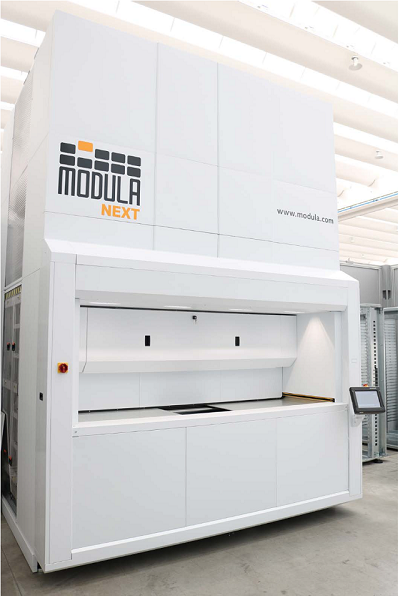
- Modula NEXT::Our most advanced generation of lift containers focuses on picking safety. Its specially designed picking opening only opens the compartment where the goods are needed, thereby reducing the risk of errors and losses and improving warehousing efficiency.
For locations with limited ceiling height but high-speed picking, we recommend investing in the Modula Horizontal Carousel.
If you’re ready to take your warehousing efficiency to a whole new level, consider integrating our advanced automated storage and retrieval systems.
Frequently Asked Questions (FAQs)
Which industries use automated storage and retrieval systems?
ASRS is widely used in manufacturing, retail, e-commerce, medicine and other industries.
Here’s how it’s applied across various industries:
- manufacturing:ASRS helps manage raw materials, components and finished products. Its high accuracy and speed reduce errors, lower labor costs and improve inventory control.
- Retail:Retailers use ASRS to optimize warehouse space and respond quickly to changes in market demand. This type of automation is particularly effective when dealing with seasonal demand spikes.
- E-commerce industry:In the e-commerce world, the speed and accuracy of order fulfillment are crucial. ASRS enables fast picking, packing and shipping, ensuring fast customer receipt and increasing customer satisfaction.
- Pharmaceutical industry:ASRS enables storage and retrieval of temperature-sensitive products in a controlled environment. The system can maintain specific temperature and humidity, ensure drug quality, and help companies meet strict regulatory requirements.
How much does an automated storage and retrieval system cost?
Costs vary widely depending on system type, size and degree of customization. Prices range from under $100,000 to millions of dollars.
Although the upfront investment is higher, the long-term savings and efficiency gains often more than offset the costs.
What are the typical maintenance requirements for automated storage and retrieval systems?
Regular maintenance is critical to optimal performance of the ASRS, including mechanical inspections, software updates and troubleshooting, all of which need to be completed by professional technicians.
Can ASRS be customized to suit warehouse needs?
Can. Automated storage and retrieval systems are highly customizable to meet specific operational needs, including handling of special product types or integration with specific warehouse management software.

Automated storage and retrieval systems (ASRS) are primarily utilised in manufacturing and distribution centers.
These systems streamline operations by replacing traditional shelving racks, further saving significant floor space, improving employee safety and boosting productivity.
In this article, we’ll explore the common types of automated storage and retrieval systems (ASRS), guide you on how to select the ideal warehouse technology for your operations and introduce you to the advanced ASRS solutions offered by Modula Australia.
What Is an Automated Storage and Retrieval System (ASRS)?
An automated storage and retrieval system (ASRS) is an innovation that stores, retrieves and delivers goods to warehouse employees.
Computers or robots control ASRS to replace large shelving areas. This allows ASRS to save floor space, improve workplace safety and boost productivity, among other benefits.
You can customise this automated solution to fit any size requirement through cube storage, robotics, carousels and shuttles.
In addition, a warehouse management system (WMS) oversees all these components to ensure efficient operation.
Who Invented Automated Storage and Retrieval Systems?
The technology known today as automated storage and retrieval systems (ASRS) originated with Demag, a precursor to Dematic.
This foundation of innovation continues to improve modern high-bay warehouses and optimises material handling.
Categories of Automated Storage and Retrieval Systems
ASRS technologies fall into three main categories, distinguished by their delivery methods:
- Shelf-Based Picking ASRS: These systems deliver an entire shelf or tray of products to the warehouse staff.
- Bin-Based Picking ASRS: These solutions bring an individual bin or tote of products directly to the warehouse operator.
- Robotic Picking: These robots transport inventory to warehouse employees.

Types of Automated Storage and Retrieval System (ASRS) Technologies
From vertical carousel modules to floor robots and beyond, here are the different types of automated storage and retrieval systems to help increase throughput and optimise your warehouse operations.
- Vertical Carousel Module (VCM): A vertical carousel module is an automated storage and retrieval system (ASRS) that features carriers on a closed-loop vertical track within a metal enclosure. It moves inventory in a vertical loop similar to a Ferris wheel, rotating shelves to deliver items directly to the operator. This solution maximises vertical space and efficiency.
- Horizontal Carousel Module (HCM): A horizontal carousel module is an automated storage and retrieval system (ASRS) that consists of a horizontal oval track. It transports items horizontally and operates like a conveyor belt that transports stored items to the warehouse operator. This system efficiently utilises horizontal space and speeds up item retrieval.
- Vertical Lift Module (VLM): A vertical lift module (VLM) is an ASRS that brings goods directly to the warehouse operator using the goods-to-person principle. Unlike a vertical carousel, the VLM is equipped with an advanced design allowing items to be retrieved individually without rotating the entire inventory.
- Vertical Buffer Modules (VBMs): Compact automated storage systems that buffer and store items vertically, optimising space and improving retrieval times.
- Mini-Load ASRS: Mini-load ASRS, or tote-stacking and case-handling ASRS, manage lighter loads up to 35 kg. These systems are ideal for storing and retrieving cartons, trays or totes in small facilities with a large variety of stock keeping units (SKUs).
- Unit-Load ASRS: Unit-Load ASRS systems keep and move bulky and heavy items, such as pallets and cases. They can handle loads ranging from 500 to 2,500 kg and reach heights of up to 161 meters. The two types of unit-load ASRS include movable-aisle and fixed-aisle cranes.
- Robotic Shuttle-based ASRS: Shuttle-based ASRS utilise a robotic shuttle to automatically deliver items. These systems operate at high speeds, handling 200 to 700 lines per hour. They can manage totes, trays, and cases weighing between 16 and 45 kg.
- Robotic Cube-based ASRS: Robotic cube-based storage systems use a three-dimensional grid to organise and access items. Items are kept in stacked bins within these cubes. Smart robots navigate atop the grid to pick and deliver bins to workstations.
- Floor Robots (AGVs/AMRs): Floor robots, or automated guided vehicles (AGVs) or autonomous mobile robots (AMRs), transport inventory within your warehouse to enhance efficiency and reduce employee travel time. You can use these robots to move bins, boxes and small parts.
- Micro-Load Stocker: A micro-load stocker features robots that move across a dense storage grid, storing and retrieving inventory bins to transport them to conveyors or workstations efficiently. It’s ideal if your warehouse operations require an ASRS for sequencing, buffering and point-of-use goods.
Key Benefits of Automated Storage and Retrieval System
Automated storage and retrieval systems offer a plethora of benefits that can significantly improve your warehouse operations.
Some key advantages include:
- Optimise Space: ASRS utilise vertical and horizontal space more efficiently than traditional storage methods, reducing the footprint needed for storage and enabling more products to be stored in a smaller area.
- Improve Productivity: ASRS can significantly speed up warehouse processes, allowing for quicker response times and higher throughput.
- Boost Accuracy: ASRS can help reduce human error in picking and placing items, enhancing inventory accuracy and reducing costly mispicks and product returns.
- Enhance Workplace Safety: ASRS can help minimise the risk of workplace injuries, such as overexertion or falls, by minimising the need for workers to manually retrieve items — especially from high or hard-to-reach places.
- Minimise Labour Costs: ASRS reduces the need for manual labour in repetitive tasks, which can lower labour costs and mitigate issues related to labour shortages, such as high turnover rates.
- Improve Inventory Management: ASRS systems are often integrated with warehouse management systems (WMS), providing real-time inventory data that further helps with better inventory control and management.
- Increase Security: ASRS can improve security and reduce theft or damage to inventory, thanks to access restrictions and automated monitoring systems that track and log each activity.
- Achieve Sustainability: Modern ASRS are designed to be energy efficient, often using less energy than traditional systems, especially in controlled environments like cold storage.
- Scalability: ASRS can be scaled up or down based on your business needs, making them a flexible solution for changing consumer behavior.
How to Choose the Right Automated Storage and Retrieval System for Your Warehouse
Choosing the right automated storage and retrieval systems for your operations requires different key considerations to make sure you select a system that aligns with your business needs, throughput goals and budget.
Here’s how you can approach the decision-making process:
- Assess your inventory needs: Consider the size, weight and type of items you need to store. Different ASRS are better suited for different item types, such as pallets, cases or individual parts. Then, evaluate the quantity and diversity of your inventory. High-volume, low-variety items might benefit from different systems compared to operations with low-volume, high-variety items.
- Analyse space constraints: Understand the physical space in your facility so you can expand or reconfigure the system as your business grows or needs change.
- Consider throughput requirements: Determine how quickly you need to retrieve inventory. For example, systems like micro-load stockers are suitable for high-speed retrieval of small items. While larger, automated storage and retrieval systems can manage bulkier items or larger quantities.
- Evaluate integration and compatibility: Check the compatibility of the ASRS with your existing warehouse management systems (WMS), enterprise resource planning (ERP) systems and other automation technologies. Ensure the ASRS can integrate seamlessly with your current and future technological infrastructure.
- Review your budget and potential ROI: Consider the upfront costs of different ASRS types. More complex systems, such as robotic cube storage may require higher initial investments. Calculate potential savings in labour, time and inventory accuracy. Weigh these against the initial and ongoing costs to determine the projected return on investment (ROI).
- Analyse supplier reliability and support: Select a supplier renowned for their reliability and experience within your specific industry. Opt for a vendor that prioritises customer-centric support and maintenance services, as the availability of parts and services can significantly affect system uptime.

What Is the ROI for ASRS?
Modula Australia’s automated storage and retrieval systems can deliver a return on investment (ROI) within six to 18 months.
This quick payback period for our Modula solutions justifies the investment.
The cost of your ASRS depends on the equipment, software, controls, delivery, installation, employee training and scheduled maintenance.
Explore Cutting-Edge Automated Storage and Retrieval Systems at Modula APAC
At Modula APAC we can help transform your warehouse operations by securing your inventory, boosting productivity and increasing efficiency.
Our automated vertical lift modules (VLMs) leverage ceiling height to maximise your facility’s footprint. They provide easy and secure access to inventory, creating a safer environment for your warehouse operators.
We offer three types of vertical lift modules (VLMs) tailored to meet diverse storage needs:
- The Modula Lift: This versatile automated solution is ideal for storing products, components, and spare parts across various industries. It’s available in a wide range of sizes and storage capacities, with thousands of customisable configurations to meet specific requirements.
- Modula Slim: Perfect for spaces with limited floor area but needing flexible vertical storage. Using the same advanced technology as The Lift, The Slim offers enhanced productivity, improved picking accuracy, and better inventory management in a compact design. It’s especially suited for storing small items like containers, spare parts, coils, and bottles.
- Modula NEXT: Our most advanced generation of lift modules, Modula NEXT prioritises safety in automated picking. It features a specially designed bay that opens only the compartment needed for picking, reducing the risk of errors and lost items, and boosting warehouse efficiency.
For facilities with limited ceiling height that require high-speed picking, consider investing in our Modula Horizontal Carousel.
If you’re ready to take your warehouse efficiency to the next level, consider integrating one of our advanced automated storage and retrieval systems.
FAQs About Automated Storage and Retrieval Systems (ASRS)
Which industries use automated storage and retrieval systems?
ASRS is widely used in different industries, such as manufacturing, retail, eCommerce, pharmaceuticals and more.
Here’s a detailed look at how different industries utilise these systems:
- Manufacturing: In manufacturing, ASRS helps manage raw materials, components and finished products. The precision and speed offered by these systems minimise errors, reduce labour costs and improve inventory control.
- Retail: Retailers use ASRS to optimise warehouse space and respond promptly to changing market demands. This automation is particularly beneficial in handling seasonal spikes in demand.
- eCommerce: For eCommerce, speed and accuracy in order fulfillment are essential. ASRS allows for rapid picking, packing and shipping processes, which enhances customer satisfaction by ensuring quick delivery times.
- Pharmaceuticals: In the pharmaceutical industry, ASRS can store and retrieve temperature-sensitive products under controlled conditions. These systems can maintain specific temperatures and humidity levels to guarantee the integrity of medications. ASRS can also help manage strict regulatory compliance for storage and handling.
How much does an automated storage and retrieval system cost?
The cost can vary widely depending on the type, size, and customisation of the system. Depending on the system, prices can range from under $100,000 to several million dollars.
While upfront costs can be significant, long-term savings and efficiency gains can justify the cost.
What are the typical maintenance requirements for an automated storage and retrieval system?
Regular maintenance is paramount for the optimal performance of your automated storage and retrieval system, including mechanical inspections, software updates and troubleshooting, all of which require skilled technicians.
Can you customise an automated storage and retrieval system for your warehouse’s needs?
Yes, automated storage and retrieval systems can be highly customised to meet specific operational requirements, including the handling of unique product types or integration with specialised warehouse management software.
![Automated warehouse picking system [Advantages + Challenges]](https://en.modula.cn/wp-content/uploads/2026/04/Modula-Picking-Solutions2-800x450-1-500x270-c-center.webp "Automated warehouse picking system [Advantages + Challenges]")